
Barbershop Versus Salon for Men
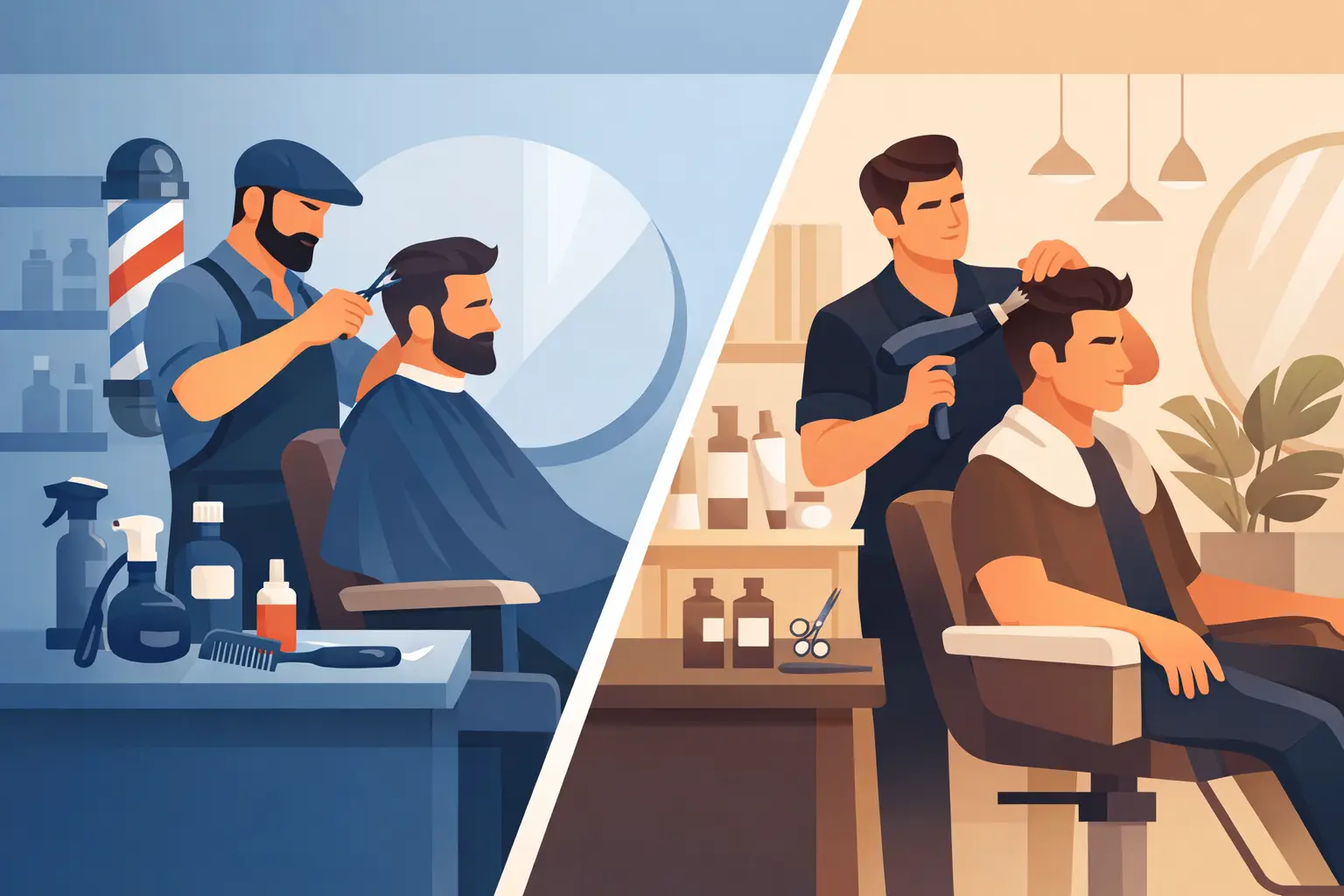
You can usually tell within five minutes whether a grooming appointment was built for men or simply adapted for them. That is the real question behind barbershop versus salon for men. Both can cut hair. Both can clean up your look. But the experience, the training, and the final result often move in very different directions.
For a lot of men, the wrong choice shows up fast. A fade loses its shape in a week. The neckline looks rushed. The beard gets treated like an afterthought. Or the cut is technically fine, but it does not match how you actually wear your hair day to day. If you care about precision, maintenance, and consistency, the difference matters.
Barbershop versus salon for men: what changes?
The biggest difference is not the chair, the mirrors, or the decor. It is the service mindset. A barbershop is usually built around men’s grooming as a specialty. A salon often serves a broader range of clients and a wider menu of hair services.
That affects everything from training to technique. Barbers are typically focused on clipper work, fades, tapers, beard shaping, lineups, short-to-medium men’s cuts, and traditional services like straight razor shaves. Salon stylists often work more heavily with shears, layering, texture, longer hair, coloring, and styling across different hair lengths and client needs.
Neither path is automatically better. It depends on the haircut you want and how you maintain it. But if you are after a sharp skin fade, a tight beard cleanup, or a classic cut that needs exact detailing around the edges, a strong barbershop usually has the advantage.
Where a barbershop tends to stand out
Men who get regular cuts often notice one thing first - control. A good barber works with structure. The shape of the fade, the balance through the crown, the blend from temple to beard, the cleanup around the ears and neckline, all of it is handled with discipline.
That matters because men’s haircuts are less forgiving than they look. A quarter inch too high on the fade changes the entire profile. A soft corner where there should be weight makes the style collapse. A beard line set too aggressively can throw off your face shape for weeks.
Barbershops also tend to understand maintenance rhythm better. If you come in every two to three weeks, the cut has to grow out clean. It cannot look great on day one and sloppy by day six. Precision is not only about the finish when you leave. It is about how the haircut holds up between appointments.
Then there is beard work. This is one of the clearest separators in the barbershop versus salon for men conversation. Many salons can trim a beard. Fewer treat it as a core craft. In a barbershop, beard shaping is usually part of the language of the shop. Cheek lines, bulk removal, mustache balance, taper into the sideburns, and neck cleanup are handled as part of one complete look, not as a side service.
If you appreciate old-school grooming, the gap gets wider. Hot towel prep, straight razor detailing, and traditional shave work belong naturally in a barbershop setting. Those services require both technical confidence and a certain respect for ritual.
Where a salon may be the better fit
Salons can be the right move for men who wear longer hair or want more styling variation. If your look depends on scissor-heavy shaping, movement, layers, or texture beyond a standard men’s cut, an experienced salon stylist may give you more options.
This is especially true if your hair sits below the ears, if you are growing it out, or if your goal is a more fashion-forward finish rather than a tighter, sharper silhouette. Salons also tend to be stronger in color services. If you want highlights, gray blending, or more complex hair coloring, that usually falls more naturally into salon expertise.
There is also a comfort factor. Some men simply prefer the salon environment. Maybe they like a longer consultation, a different pace, or a more style-driven conversation. That is not wrong. The best setting is the one that fits your grooming goals and gives you reliable results.
The mistake is assuming every place that cuts hair is interchangeable. It is not.
The cut you want should decide the room
A lot of men choose based on convenience alone, then wonder why the result feels off. The better approach is to reverse it. Start with the cut, then choose the professional.
If you want a skin fade, burst fade, taper, crop, crew cut, undercut, lineup, or beard-focused cleanup, a barbershop is usually the natural home. Those services demand clipper precision and a strong eye for sharp transitions.
If you wear a medium-to-long style with more movement, want help with shape as it grows, or need color work, a salon may be better equipped. If your look lives somewhere in the middle, the individual professional matters more than the sign on the door.
This is where reputation counts. Reviews, photos of actual work, and consistency across cuts tell you more than branding ever will. A polished website means very little if the fades are uneven or the beard work looks generic.
Training matters, but execution matters more
People often talk about barber training versus salon training as if one is universally superior. That misses the point. Training gives the foundation. Execution gives the client experience.
A disciplined barber with years of repetition on men’s cuts often sees details faster. Head shape. Growth patterns. Cowlicks. Density changes through the sides. How to keep weight where it belongs and remove it where it does not. That pattern recognition is earned through volume and specialization.
At the same time, there are salon professionals who are excellent with men’s hair, especially if they actively specialize in it. There are also barbers who move too fast, rely on routine, and stop paying attention. The label only gets you so far.
What you want is someone who listens, works with intention, and finishes clean. In a premium men’s service environment, nothing should feel rushed. The consultation should be clear. The detailing should be deliberate. The result should fit your face, your job, and your real maintenance habits.
Atmosphere is not a small detail
Some men think atmosphere is marketing fluff. It is not. The environment shapes the service.
A barbershop usually carries a more direct rhythm. Men’s conversations. Familiar services. A stronger focus on repeat clients who know exactly how they like their cut. That creates efficiency, but in the best shops, it does not mean speed over quality. It means confidence built on routine and craft.
A salon may feel broader and more style-oriented. For some clients, that is a plus. For others, it feels less tailored to what they actually need. If you want a place where men’s grooming is the main event rather than one part of a larger menu, a barbershop tends to feel more dialed in.
That sense of fit matters more than people admit. When the room understands your standards, the service gets better.
How to choose without overthinking it
If you are deciding between the two, be honest about what you expect every time you sit down. Do you want a clean, masculine finish with tight edges and dependable upkeep? Do you wear a beard that needs real shaping, not a quick pass with trimmers? Do you want your haircut to look intentional in the office, on the weekend, and two weeks later?
If that sounds like you, a quality barbershop is usually the stronger bet. That is why so many men looking for consistency end up preferring a shop built around precision cuts, classic shaves, and modern style execution. In a place like Omar’s Barbershop, that standard is not treated as a luxury extra. It is the baseline.
If your style needs more length work, more styling experimentation, or color expertise, a salon may serve you better. There is no trophy for choosing one category over the other. The right choice is the one that respects your look and gets it right consistently.
A good haircut should not feel like a gamble. Choose the room that treats your grooming like a craft, not a transaction.