
Beard Trim vs Full Shave for Your Best Look
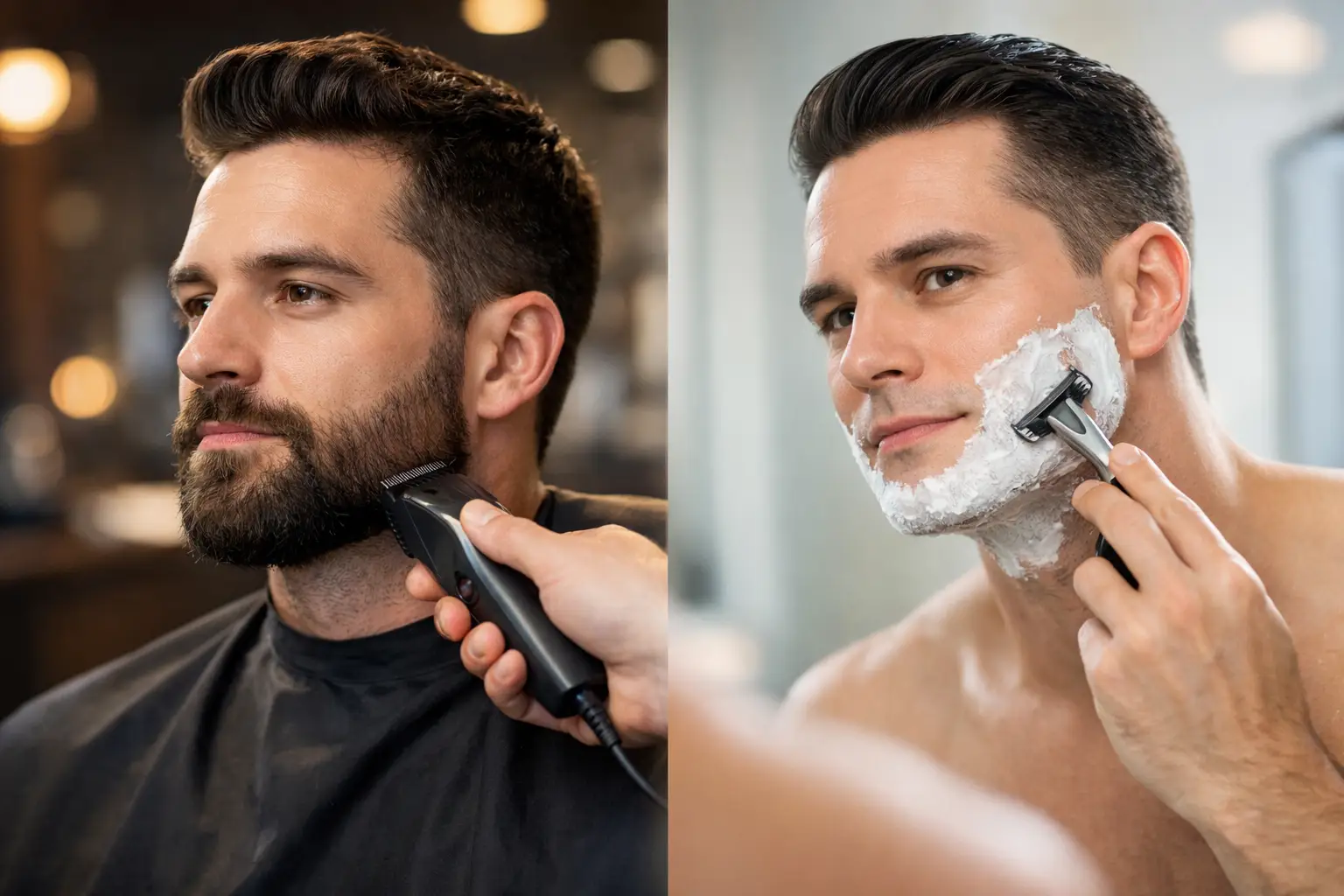
A beard can make a strong haircut look sharper, add structure to a softer jawline, and give your face a more deliberate presence. But beard trim vs full shave is not simply a question of whether you want facial hair. It is a decision about maintenance, skin comfort, face shape, workplace expectations, and the impression you want to make before you say a word.
The right choice should look intentional. A clean shave is not automatically more professional, and a full beard is not automatically more masculine. The best result is the one that fits your features, routine, and standards for personal presentation.
Beard Trim vs. Full Shave: Start With Your Goal
A beard trim keeps your facial hair while bringing order to its shape, length, neckline, cheek lines, and mustache. It works well when you like the character a beard adds but do not want it to look heavy, uneven, or neglected. Done properly, a trim turns growth into a defined part of your overall style.
A full shave removes the beard entirely, leaving a clean, smooth finish. It puts more attention on your skin, jawline, haircut, and facial features. For some men, that clean-shaven look feels crisp and disciplined. For others, it exposes areas they prefer a beard to balance, such as a rounder face, a softer chin, or uneven skin texture.
Your goal may change with the season, your job, an event, or the haircut you are wearing. A client with a tight fade and a well-shaped short beard often gets a strong modern look. The same client may choose a straight razor shave before a wedding, an interview, or a major reset after months of growth.
What a Professional Beard Trim Does Better
The difference between a beard that is simply shorter and a beard that looks finished comes down to detail. A professional trim does more than take off bulk. It creates proportion between the beard, mustache, sideburns, and haircut.
A skilled barber evaluates where your beard grows thickest, where it grows lighter, and how it sits around your jaw and chin. The goal is not always symmetry in the strictest sense. Natural growth patterns vary. The goal is to build a clean shape that looks balanced from the front and profile.
The neckline matters most. Set too high, it can make a beard look like it is floating under the chin. Left too low, it can look untidy even when the rest of the beard is well maintained. Clean cheek lines also make a major difference, especially for men with dense growth that can quickly spread toward the upper cheekbones.
A trim is usually the better choice if your beard fills in well, you want to add definition to your jawline, or you enjoy facial hair but need it to look appropriate for work. It is also the smarter option when you have spent time growing length and do not want to start over.
When a Full Shave Makes the Stronger Statement
A full shave has a directness that a beard cannot replicate. It is clean, sharp, and low-profile. When paired with a fresh haircut, it can make your face look brighter and more open, particularly if your beard tends to grow patchy or wiry.
For men with a strong jawline and even skin, a clean shave can be a natural fit. It can also work well when your facial hair is inconsistent across the cheeks or when your beard requires more daily correction than you are willing to give it. There is no advantage in keeping a beard that never looks settled.
A straight razor shave takes the experience further than a quick pass with a disposable razor at home. Proper preparation with warm towels and careful technique softens the hair, supports a closer finish, and gives the service a level of precision that rushed bathroom shaving rarely delivers.
That said, a full shave is not maintenance-free. Most men need to shave every day or every few days to preserve the clean look. If your beard grows quickly, five-o'clock shadow may be back before the workday ends. Choose it because you like the result, not because you assume it requires less effort.
Match the Choice to Your Face Shape
Facial hair can change the visual structure of your face. A good beard trim uses that fact with purpose.
If your face is rounder, a beard with slightly more length at the chin and tighter sides can create a longer, more defined appearance. If your face is long or narrow, excessive length below the chin can make it appear even longer. A fuller but controlled beard through the sides may create better balance.
Men with a square jaw often have flexibility. A short boxed beard can emphasize the jaw, while a clean shave puts the natural bone structure on display. If your chin is less pronounced, a beard can add weight and shape where you want it most.
Do not force your face into a trend. A beard style that looks strong on someone else may work against your proportions. The best barbers build the shape around the individual, not around a photo on a phone screen.
Consider Your Skin Before You Commit
Skin sensitivity can settle the beard trim versus full shave question quickly. If shaving gives you razor bumps, irritation, ingrown hairs, or persistent redness, keeping a short, clean beard may be more comfortable than shaving down to the skin every morning.
Men with curly or coarse facial hair are especially prone to ingrown hairs when shaving too closely or against the grain. Better preparation and technique can reduce the problem, but not every skin type enjoys a daily close shave. In those cases, a short beard with a sharply cleaned neckline can deliver a polished appearance without constant irritation.
If you prefer a full shave, avoid treating it like a race. Clean skin, softened hair, a sharp blade, and controlled passes make a real difference. Dull blades and hurried pressure are a fast route to redness and rough texture.
Be Honest About Maintenance
A beard trim asks for regular upkeep, but the schedule depends on your length and growth rate. Short beards often look their best with line work every one to two weeks. Medium and longer beards may need less frequent reshaping, though they still benefit from occasional removal of split ends, stray hairs, and uneven bulk.
At home, you will need to brush or comb the beard, keep it clean, and use the right amount of conditioning product for your hair type. The goal is controlled texture, not an oily shine. You should also avoid carving new cheek and neckline lines every day unless you are confident in the shape. Small mistakes become obvious quickly.
A full shave requires consistency instead of beard care. You will need reliable shaving tools, a clean technique, and a skincare routine that supports your face after each shave. It can be quicker than managing a beard, but only when you know how your skin responds.
Let Your Haircut and Lifestyle Guide the Finish
Your beard should not compete with your haircut. A skin fade, taper, or short crop looks stronger when the sideburn transition and beard weight are handled with intention. A fuller hairstyle can often support more beard volume, while a very tight cut may call for a shorter, more precise beard.
Lifestyle matters, too. If you wear a uniform, work in a client-facing role, train regularly, or have limited time each morning, choose a look you can maintain without frustration. A beard should add confidence, not become another unfinished task before you leave the house.
For special occasions, it can be worth treating the decision as part of the full grooming plan. Get the haircut, beard service, and any cleanup done together so the lines, proportions, and finish all work as one. At Omar's Barbershop in Anaheim, that hand-finished approach is what separates routine grooming from a look that feels fully put together.
The next time you sit in the chair, do not ask only whether to keep the beard or lose it. Ask what will make your face, haircut, schedule, and standards work better together. That is where the right choice becomes obvious.