
What to Ask for at the Barber for a Sharper Cut
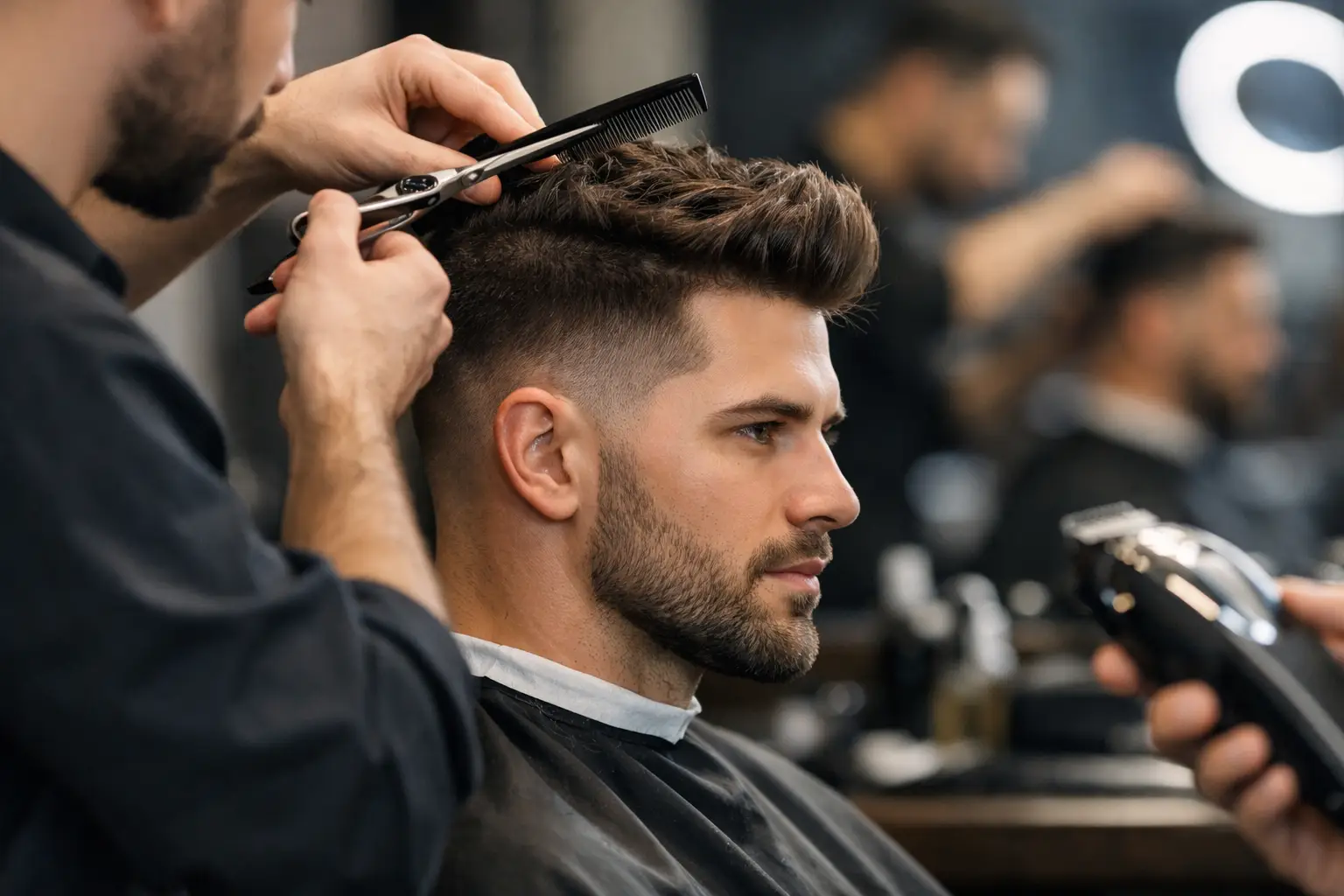
A good haircut should not depend on luck, vague hand gestures, or hoping your barber reads your mind. The difference between an average cut and one that stays sharp for weeks is knowing what to ask for at the barber before the cape goes on.
You do not need to know every technical term. You do need a clear idea of how you want to look, how much maintenance you are willing to handle, and what did not work the last time. A professional barber can take it from there.
Start With the Result You Want
Avoid opening with only, “Just clean it up.” Clean means something different to every client. Instead, explain the result you are after: polished for the office, textured and relaxed, tight on the sides, fuller through the beard, or easy to style in under five minutes.
Your barber is considering your head shape, hair density, hairline, growth patterns, and the way your hair sits when it is dry. Saying, “I want it professional but not too short,” is a useful starting point, but it becomes much clearer when you add where you want to keep length and where you want control.
For example: “Keep enough length on top to style back, take the sides down clean, and make sure it grows out well.” That gives your barber a direction without forcing a cut that does not suit your hair.
If your last haircut missed the mark, say so plainly. Maybe the fade went too high, the top was cut too short, the beard lines were too sharp, or the neckline looked bulky after a week. Those details help prevent a repeat.
What to Ask for at the Barber: The Five Details That Matter
A complete haircut request usually comes down to five areas: the top, the sides, the transition, the neckline, and the finish. You do not need to deliver a speech. A few precise instructions will make the consultation far more effective.
1. Specify the Length and Shape on Top
The top determines the personality of the cut. Tell your barber whether you want it short and controlled, left long enough to part, textured for a natural look, or grown out for volume.
Clipper numbers can help, but only when you understand them. A number 2 is shorter than a number 4, yet the same guard can look different depending on hair color, density, and the way the barber blends it. Rather than relying on a number alone, pair it with a visual outcome: “Use scissors on top and leave enough to push up,” or “Take it short, but do not expose too much scalp.”
If you style your hair with pomade, clay, cream, or no product at all, mention that. A cut built for a structured side part is different from one designed to air-dry with texture. Your daily routine should shape the recommendation.
2. Be Clear About the Sides
The sides are where most haircut requests become vague. Say whether you want them tight, moderate, or left with some weight. Then explain if you want a fade, taper, undercut, or a more traditional scissor-over-comb finish.
A fade takes the hair down gradually toward the skin or a very short length. A taper is more conservative, focusing on the sideburns and nape while leaving more fullness around the sides. If you want a clean, professional cut that does not look severe as it grows in, a taper or low fade is often the better call.
Ask for the height that fits your preference. A low fade stays below the temple and creates a subtle finish. A mid fade sits around the midpoint of the head and gives more contrast. A high fade removes more weight and creates a bolder, sharper profile. High fades can look excellent, but they grow out faster and may feel too aggressive for men who prefer a classic shape.
3. Explain How Tight You Want the Fade
“Skin fade” is not the same as “fade.” A skin fade blends down to bare skin. It creates a crisp contrast, but it requires more frequent maintenance if you want it looking freshly cut. A shadow fade leaves a touch of hair at the bottom for a softer transition. A number 1 or number 2 at the base offers an even more conservative look.
A clear request might be: “Give me a low skin fade, but keep it low and leave weight at the ridge.” Or: “I want a mid fade, starting at a number 1, with a soft blend into the top.” The words that matter most are low, mid, high, skin, shadow, and soft or tight.
If you are unsure, ask your barber what will complement your face shape and hair growth. That is not giving up control. It is using professional judgment where it counts.
4. Do Not Forget the Neckline and Sideburns
The back of your neck can make a fresh cut look finished or neglected. Tell your barber whether you prefer a natural neckline or a squared, blocked neckline. A natural taper grows out more gracefully. A hard block looks very clean on day one but can show an obvious line as your hair grows.
Sideburns should also match the cut and beard. Ask for them short and clean, tapered into the beard, or kept fuller if you wear more facial hair. Small details like these separate a rushed haircut from a hand-finished service.
5. Ask for the Right Finish, Not Just a Cut
The final styling matters. If you want a matte, textured finish, say so. If you prefer a traditional side part with shine and hold, tell your barber. Ask to see how the cut should be styled at home, especially if you are changing your usual look.
A strong barber will show you where to apply product, how much to use, and which direction to dry or comb the hair. This is particularly valuable with cowlicks, thick hair, thinning areas, or a new part. The right cut should work with your hair, not demand a 20-minute routine every morning.
Bring a Photo, Then Explain What You Like About It
Photos are useful, but they should start a conversation rather than end one. The man in the image may have different hair texture, density, hairline, or face shape. Show the photo and point out the exact feature you want: the low taper, the texture on top, the beard transition, or the overall length.
It also helps to say what you do not want. “I like the top, but I do not want the fade that high,” gives your barber a more accurate target than asking for the photo exactly as it appears.
Bring a photo of yourself after a haircut you liked whenever possible. That is the best reference because it shows what works on your own hair.
Tell Your Barber About Your Beard
A haircut and beard trim should look intentional together. If you wear a beard, ask whether it should be blended into the sideburns or separated with a defined line. Let your barber know if you want to keep bulk at the chin, reduce width at the cheeks, sharpen the neckline, or maintain a more natural finish.
Be realistic about your growth pattern. A heavily carved cheek line may look sharp in the chair but can demand frequent cleanup. A softer, natural line is often easier to maintain while still looking disciplined. For a close shave, ask about a hot towel and straight razor finish for the cleanest result around the neck and cheeks.
Speak Up Before the First Pass
The best time to adjust the plan is before the barber takes length off. Once the top is cut too short or the fade is taken too high, the only answer is time. During the consultation, ask how much length will be removed and where the fade will begin.
You can also communicate as the cut takes shape. If you see the sides getting tighter than expected, say something early and respectfully. A professional barber wants the result to match the plan. Clear communication is part of the service, not a disruption.
For regular clients, consistency gets easier with every visit. Let your barber know how the cut grew out, whether the beard felt too short, and when you would ideally return. Most sharp fades need attention every two to three weeks, while longer scissor cuts and natural tapers can often go four to six weeks.
A great barber does more than copy a style. He learns how your hair grows, what your schedule demands, and which details make you feel put together. At Omar's Barbershop, that conversation is treated as part of the craft. Come in with a clear direction, stay open to sound advice, and leave with a cut that looks just as deliberate outside the shop as it did in the chair.