
Anaheim Barbershop Guide for a Sharper Look
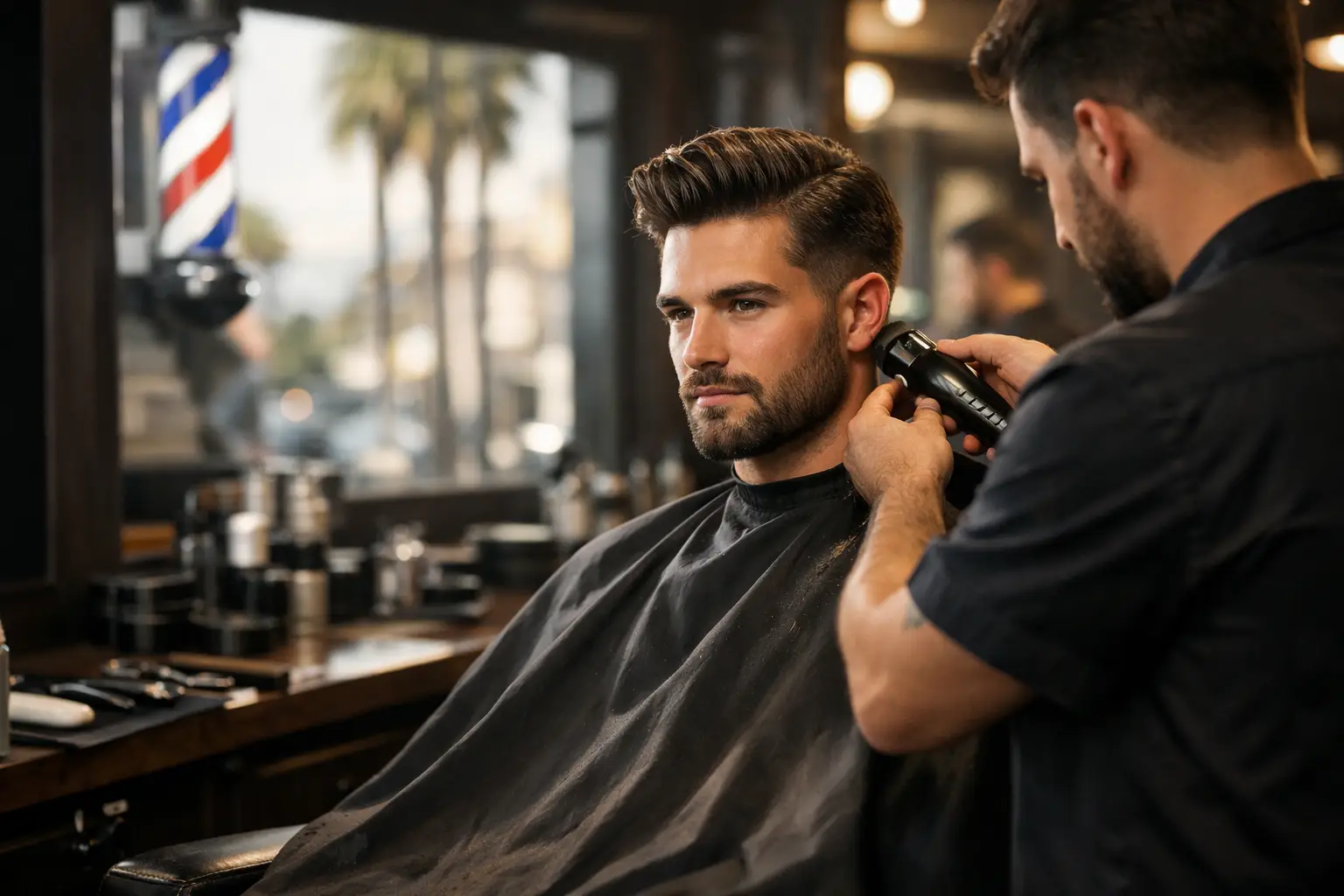
A bad haircut announces itself before you do. The blend looks heavy in daylight, the neckline grows out unevenly, and the style that looked acceptable in the chair loses its shape within a week. This Anaheim barbershop guide is for men who are done gambling on rushed cuts and want a barber whose work stays sharp after the appointment.
A quality barbershop is not defined by a flashy interior or a long service menu. It comes down to technical control, consistency, and whether the barber pays attention to the details most people only notice when they are wrong. Your haircut, beard, and grooming routine should work for your face, your schedule, and the way you actually live.
What a Good Anaheim Barbershop Should Deliver
Start with the standard of the cut. A strong barber does more than shorten hair. He reads growth patterns, head shape, density, and the natural direction of your hair before deciding how aggressively to taper, fade, or remove weight. That assessment matters whether you wear a tight skin fade, a classic side part, textured length on top, or something in between.
The finish is where average service separates from professional barbering. Look closely at the transition from the sides to the top, the symmetry around the ears, the corners of the lineup, and the neckline. A fade should move cleanly through its levels without visible steps. A lineup should be crisp without being pushed so far back that it looks unnatural after a few days.
The same standard applies to beard work. A beard trim is not simply a clipper pass. It should account for cheek lines, neck definition, bulk through the jaw, mustache shape, and the balance between your beard and haircut. The goal is a controlled, masculine finish that looks intentional from every angle.
A traditional straight razor shave adds another level of care when it is done properly. Hot towels soften the beard, shaving preparation protects the skin, and deliberate razor work creates a closer result than a quick cleanup. It is a service worth choosing when you value the ritual as much as the finish, but it should never feel hurried.
The Anaheim Barbershop Guide to Choosing Your Barber
The best fit depends on what you need regularly. A client maintaining a skin fade every two weeks has different priorities than a professional who wears a medium-length scissor cut and visits once a month. Fathers booking cuts for themselves and their kids need patience and reliable timing. The right shop understands those differences instead of treating every head of hair like the same job.
Before your first visit, consider how a barbershop handles its work, not just how its photos look online. Strong review patterns are useful because they reveal what clients experience repeatedly. Pay attention to comments about consistency, attention to detail, cleanliness, communication, and whether the cut still looks good after it settles in. One great photo can be staged. A dependable reputation is earned appointment by appointment.
Convenience matters too, but it should support quality rather than replace it. Online scheduling is valuable when you need to fit grooming around work, family, or a packed week. Walk-in availability is equally useful when your calendar changes or you need a cleanup before an event. Seven-day service can make regular maintenance easier, especially for men who cannot step away during standard business hours.
Still, availability alone is not the deciding factor. If a shop can get you in quickly but sends you out with an uneven blend, the convenience was expensive. The better question is whether the barber can deliver the same standard when the shop is busy as when the chair is quiet.
Know What to Ask For in the Chair
Clear communication gives your barber a better starting point, and it prevents the vague request that often ends with a result you did not have in mind. You do not need industry jargon. You do need to explain what you like, what did not work last time, and how much maintenance you are willing to do.
For a fade, say whether you want the transition low, mid, or high and whether you prefer skin, zero, or a softer taper at the bottom. These are not interchangeable choices. A low fade keeps more weight near the temple and is often easier to wear in conservative workplaces. A high fade creates more contrast and can sharpen the overall profile, but it requires regular upkeep to stay clean.
For the top, explain whether you style your hair daily, use product, wear a hat, or prefer a wash-and-go routine. A textured crop may be practical for thick hair and minimal styling. A side part can look polished but may need length, direction, and product to hold properly. Longer styles offer versatility, though they demand more patience during grow-out and more skill with scissor work.
If you have a beard, tell the barber whether you want it fuller, tighter, or simply cleaner. Mention sensitive skin, uneven growth, cowlicks, scars, or areas you do not want taken too high. A good barber will ask follow-up questions and offer a recommendation, but the final look should still feel like yours.
Photos can help, especially when you are making a major change. Use them as a reference, not a guarantee. The same cut will sit differently based on hairline, texture, density, and face shape. A professional barber translates the idea into a version that works on you rather than forcing a copy that does not.
Match Your Cut to Your Maintenance Schedule
The sharpest cut in the world will not remain at its peak forever. A skin fade can look best with visits every one to two weeks. A taper or longer blend may carry well for two to four weeks, depending on your hair growth and the amount of contrast in the style. Beard lineups commonly need attention sooner than the beard length itself.
That does not mean every client needs the most frequent schedule. If you prefer a natural, lower-maintenance look, ask for a softer taper and leave enough length to grow out gracefully. If you want a high-contrast fade and a precise beard outline, accept that regular appointments are part of the look. There is no wrong choice, only a mismatch between the style you request and the maintenance you are willing to keep.
Between appointments, use a quality shampoo without overdoing it, condition when your hair needs moisture, and choose styling product based on finish rather than hype. Matte clay can create separation and control. Pomade can add shine and classic hold. Sea salt spray may help with texture, though it can feel drying for some hair types. For beards, a light oil or balm can help manage dryness, but too much product can make a clean trim look heavy.
Why Craft Still Matters
Chain haircut speed has its place when the only goal is getting in and out. But speed often shows up in the details: a rushed consultation, a blend that is not fully checked, a beard line finished without balance, or a final look that was never inspected from more than one angle.
Professional barbering is measured in those final minutes. It is the hand-finished cleanup, the check of the crown and profile, the adjustment when one side grows differently, and the discipline to keep working until the cut is right. That level of care is particularly valuable when your appearance carries weight at work, on a date, at a wedding, or in the everyday moments where confidence is built quietly.
At Omar's Barbershop, the standard is precision cuts, classic shaves, modern style, and the kind of personal attention that makes a regular appointment feel dependable rather than routine.
Make Your Next Appointment Count
Arrive with a general idea, but leave room for professional input. Tell your barber what has worked, what has not, and how often you realistically plan to return. Then pay attention to how the cut feels a week later, not only how it looks under barbershop lighting.
The right barber becomes part of your routine because he learns your hair, your preferred finish, and the level of detail you expect. Once you find that consistency, keep the schedule that protects it. A sharp appearance is rarely an accident. It is maintained with the same discipline that built it.