
How to Keep Beard Edges Sharp Between Trims
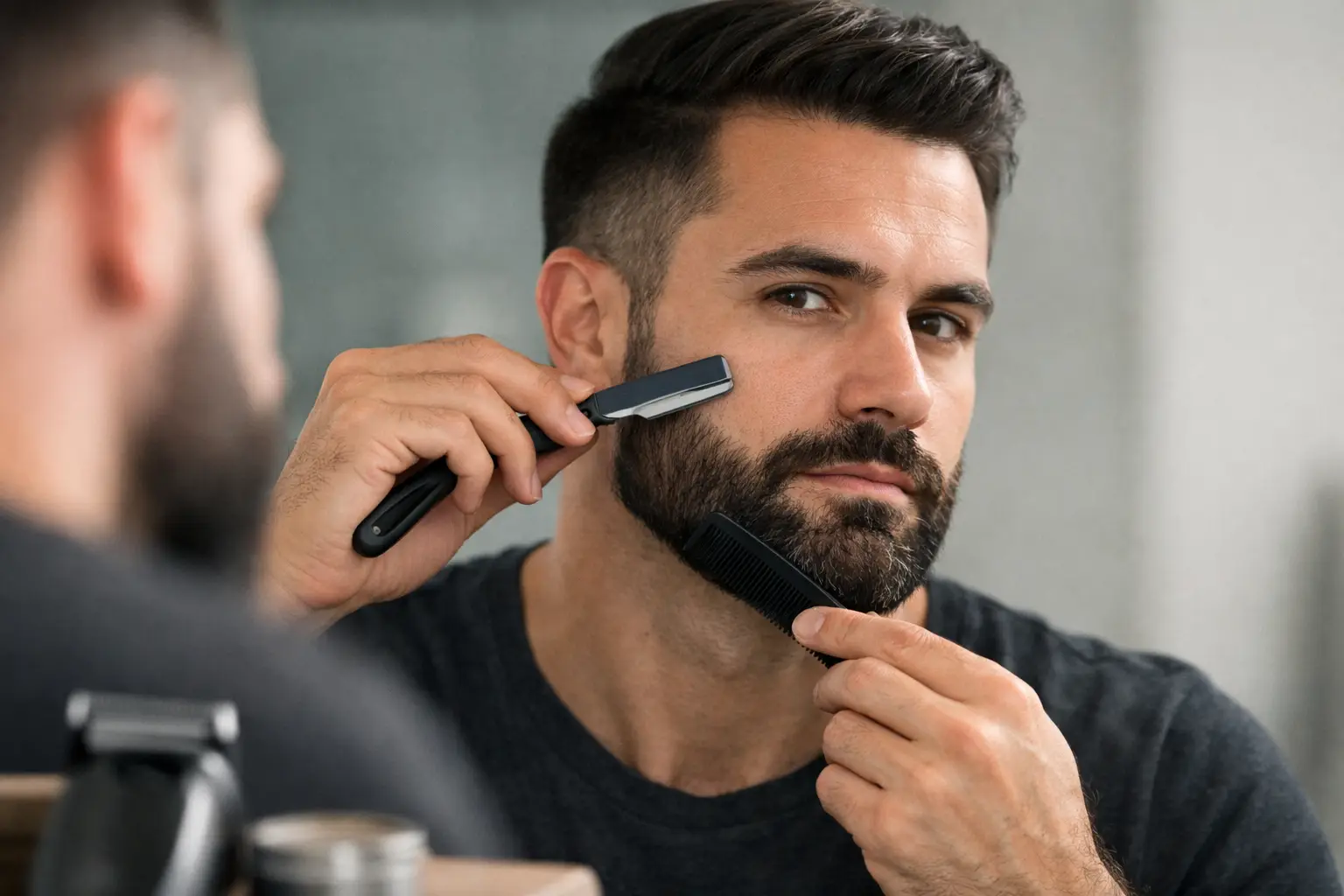
A sharp beard does not come from taking more hair off. It comes from knowing exactly what should stay. Learning how to keep beard edges sharp between barber visits is less about aggressive trimming and more about controlled maintenance: clean lines, healthy skin, and the discipline to leave a good shape alone.
Your beard can be full, short, boxed, faded, or naturally rugged. The standard is the same. The cheek line should look intentional, the neckline should sit in the right place, and the outline should complement your face rather than fight it. A few careful minutes each week can keep that freshly finished look in place without turning your bathroom mirror into a repair shop.
How to Keep Beard Edges Sharp Without Overdoing It
The biggest mistake men make is chasing perfection every morning. Beard hair grows unevenly, skin shifts, and lighting can make a line look different from one angle to the next. If you cut every stray hair the moment you see it, your edge slowly creeps inward. A beard that was shaped to look strong can become narrow, patchy, or overly carved.
Instead, establish a simple maintenance rhythm. Check your edges every two to three days, but only remove obvious growth outside the line your barber created. For most men, a proper cleanup once a week is enough. If you grow fast or keep a very short beard, you may need a light touch-up twice weekly. The goal is consistency, not constant cutting.
Start with a clean, dry beard. Water can make hair lie flatter and appear longer or shorter than it truly is. Brush your beard into its natural direction, then inspect it in good light from the front and both sides. A handheld mirror helps when checking the area under the jaw and around the ears.
Protect the Neckline First
The neckline carries more weight than most men realize. A line set too high makes the beard look like it is sitting on the jaw. Set too low, it loses structure and begins to look unfinished. The right neckline creates a clean transition from beard to neck while preserving enough density to make the beard look masculine and balanced.
A reliable reference point is about one to two finger widths above your Adam's apple. From there, imagine a soft curve running upward toward the back corners of your jaw. This is not always a perfectly straight line. A natural, subtle curve usually looks better and grows out more cleanly than a hard geometric cut.
Use a detail trimmer to remove the bulk below that line. Work in small passes and keep the trimmer flat against the skin. Do not press hard. Once the area is cleared, use the corner of the blade to refine the edge rather than repeatedly dragging the full blade across it.
If you want a closer finish, follow with a razor only after trimming. Apply warm water and a quality shaving cream or clear shave gel, then shave with the grain in short strokes. A straight razor can deliver exceptional definition, but it also has the smallest margin for error. If you are not confident with a blade, keep the home cleanup to a trimmer and leave the razor finish to your barber.
Do Not Chase the Neckline Upward
A neckline can look slightly fuzzy after several days, especially in the center. That does not mean the line needs to move. Remove the new growth below the original boundary only. The moment you start cutting into the established line, you change the beard's architecture. Over several weeks, that small adjustment becomes a noticeably weaker shape.
Keep the Cheek Line Natural and Clean
The cheek line is where a beard can look polished or forced. For men with naturally high, dense growth, the best cheek line may require almost no trimming at all. For others, a gentle cleanup makes the beard look sharper and helps the mustache, sideburn, and beard connect with purpose.
Follow the direction of your natural growth. Do not create a dramatic diagonal line just because it looks sharp in a filtered photo. An overly low cheek line can make a full beard look sparse and can be difficult to grow back evenly. The strongest line is usually the one that removes isolated hairs above the beard while keeping the natural density intact.
Use a detail trimmer or precision blade for this area. Take one small section at a time, beginning near the sideburn and working toward the corner of the mouth. Pause often. Your face is not a flat surface, and a line that looks even on one side can look completely different when you turn your head.
For a close, clean finish, shave above the line with the grain. Clear shave gel is useful here because you can see the edge while you work. If your skin is sensitive or prone to razor bumps, do not force a skin-close shave every time. A trimmer-defined edge with minimal irritation looks far better than a razor burn that lasts all week.
Use Tools That Match the Detail
A beard edge is only as good as the tool used to create it. Your everyday clipper may be excellent for reducing bulk, but it is often too wide to shape corners, clean the mustache border, or work precisely around the mouth. A narrow detail trimmer gives you more control and makes it easier to take off less hair.
Keep the blade clean, dry, and oiled according to the manufacturer's instructions. A dull or dirty blade pulls hair, skips across the skin, and creates uneven results. It can also contribute to irritation. Replace disposable razor blades regularly as well. A blade that has started to drag is not saving you money or time.
You do not need a crowded counter full of grooming equipment. For most beard maintenance, a good detail trimmer, a beard brush or comb, a clean razor, shave gel, and a moisturizer are enough. Quality matters more than quantity because the work is precise.
Treat Your Skin Like Part of the Finish
Sharp edges are more visible on calm, healthy skin. Dryness, ingrown hairs, acne, and razor bumps can make even a well-shaped beard look rough. Your skin needs preparation and recovery, especially if you shave the neckline or cheek line close.
Wash your face with a cleanser that does not leave your skin tight or stripped. After shaving, rinse with cool water, pat dry, and apply a light, alcohol-free moisturizer. If your skin tolerates it, a gentle exfoliant used once or twice a week can help prevent ingrown hairs around the neck. Do not scrub aggressively right before shaving, particularly if you are already irritated.
Beard oil is useful for the beard itself, especially if it feels coarse or dry, but it is not a substitute for skincare. Use a small amount and work it through the beard to the skin beneath. Too much product can weigh the hair down, collect debris, and make the outline look less crisp.
Know When a Barber Should Reset the Shape
Home maintenance preserves a professional shape. It does not replace a full beard service. Growth patterns change, lengths become uneven, and the proportions between your sideburns, beard, mustache, and haircut need periodic correction. This is especially true when you are growing a beard out, changing its style, or pairing it with a fade.
A professional reset every two to four weeks works for many men, though the right schedule depends on growth rate and beard length. Short, highly defined styles need more frequent work. Longer beards can go longer between appointments, but their outline still benefits from a careful cleanup.
At Omar's Barbershop, beard work is treated as part of the complete look, not an afterthought. A precise line should work with your haircut, face shape, and natural growth pattern. That is the difference between a beard that merely looks trimmed and one that looks properly finished.
The best maintenance habit is simple: preserve the shape you already paid for. Take off only what clearly sits outside the line, care for the skin underneath, and let a skilled barber handle the corrections that require a trained eye. Sharp edges are built through restraint.