
How to Fix Uneven Beard Lines Without Overcutting
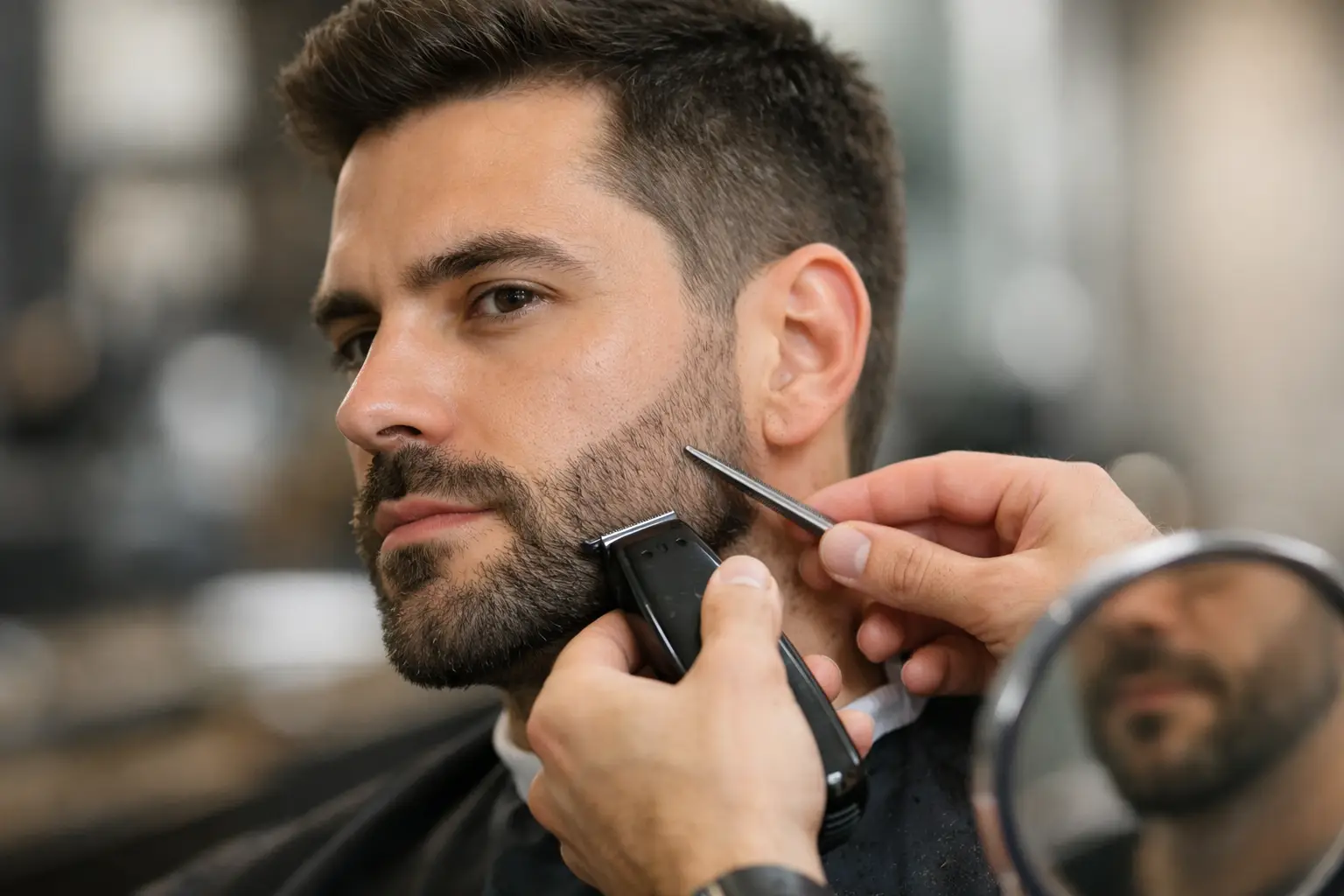
A beard line can look uneven for a dozen reasons: different growth patterns, a rushed trim, poor lighting, or one side of your face simply sitting a little differently than the other. Knowing how to fix uneven beard lines starts with one rule: do not chase perfection with more cuts. Most beard mistakes happen when a man keeps trimming the higher side until both sides are too high.
A clean beard is not about forcing identical lines onto an asymmetrical face. It is about creating balance, preserving density, and building a shape that looks sharp from a normal conversation distance. That takes restraint, a steady hand, and an honest look at what your beard naturally wants to do.
Start by Finding the Cause of the Unevenness
Before you pick up a trimmer, identify what is actually uneven. Your cheek lines may grow at different heights. One sideburn may be denser. Your neckline may be cut too high on one side. Or the beard itself may be symmetrical, while your head position in the mirror makes it appear off.
Stand straight in front of a well-lit mirror and look forward, not down. Use a second mirror or your phone's rear camera to check each side from a slight angle. Wet or oily beard hair can clump together and create false gaps, so start with a clean, dry beard that has been brushed in its natural direction.
Pay attention to the difference between a line problem and a density problem. If one cheek has thinner growth, cutting the fuller side down to match can leave both sides looking weak. A better move is often to keep the natural line slightly lower on the thinner side while softening and blending the fuller side. Balance beats identical measurements.
How to Fix Uneven Beard Lines Step by Step
The safest approach is to make small corrections, then stop and reassess. Work in good light, use a clean mirror, and give yourself enough time. This is not a five-minute job before work if your beard is already uneven.
Set Your Baseline Before You Trim
Brush your beard downward and step back from the mirror. Decide which side has the stronger, more natural-looking line. That side becomes your reference. Do not automatically use the lower or higher side as the standard. Use the side that best suits your face shape and leaves the beard looking full.
For cheek lines, imagine a gentle path from the sideburn toward the corner of the mouth. The exact angle depends on your beard density and preferred style. A fuller beard can support a higher, sharper cheek line. Patchier growth usually looks better with a lower natural line and less severe contrast.
For the neckline, start with a practical reference: place two fingers above your Adam's apple, then imagine a curved line that travels upward toward the back of each jaw. This should be a guide, not a hard rule. A short beard can carry a slightly higher neckline, while a fuller beard usually needs more weight below the jaw to avoid looking boxed in.
Trim the Higher Side First, in Tiny Increments
If one cheek line is higher than the other, remove hair from the high side only until the difference is less noticeable. Use the corner of a detail trimmer, not the entire blade, and take off a few hairs at a time. After each pass, brush the beard down again. Hair that looked outside the line may settle back into place.
Avoid making long, aggressive strokes. A straight razor or precision trimmer can create a crisp edge, but it also makes every error more visible. Keep the first pass conservative. You can always remove more hair. You cannot put back the dense section you just carved away.
If one side is lower because of sparse growth, do not raise the other side to match unless the difference is dramatic. Instead, clean the obvious stray hairs above both lines and let the natural shape do the work. A softer cheek line often looks more intentional than two high, thin lines that expose too much skin.
Correct the Neckline With a Center Point
Necklines go crooked when each side is trimmed separately without a center reference. Find your center point first, then work outward in short sections. Keep your chin level. Tilting your head back stretches the skin and can make a straight line look uneven once your head returns to a normal position.
Use the trimmer to establish the center, then connect each side gradually toward the jaw. Check the line from the front and both profiles. If one side appears heavier, remove only the loose hair below the intended curve. Do not cut into the bulk of the beard near the jaw just to make the sides match perfectly.
Blend the Difference Instead of Drawing a Harder Line
A slight mismatch is often best solved with blending. Use a guarded trimmer to reduce bulk under a heavy jaw corner, beneath a sideburn, or near a cheek line that appears too dense. This creates a cleaner transition without changing the perimeter too much.
This matters most with medium and longer beards. Sharp outlines are only part of the finish. If the weight inside the beard is uneven, a technically straight line can still look wrong. A controlled blend makes the beard sit naturally and gives the shape more authority.
Use the Right Tool for the Job
You do not need a drawer full of grooming equipment, but precision work calls for precision tools. A quality adjustable trimmer handles bulk removal and controlled blending. A narrow detail trimmer is better for corners, cheek lines, and neckline cleanup. A beard brush helps you see true growth direction, while a clear shaving gel or light pre-shave oil can help define the edge without hiding it under foam.
A straight razor provides the cleanest finish, especially around the cheeks and neck, but it is not the best learning tool for an uneven line. If you are not comfortable shaving your own contours, use the trimmer first and reserve the razor for a professional finish. Razor sharpness is unforgiving, and one hesitant pass can turn a minor correction into weeks of regrowth.
Common Mistakes That Make Uneven Lines Worse
The biggest mistake is trimming both sides repeatedly until they meet somewhere in the middle. That usually creates cheek lines that are too low, a neckline that is too high, or a beard that has lost its natural structure.
Another common problem is checking symmetry from too close to the mirror. At six inches away, you will notice tiny differences nobody else can see. Step back two or three feet after every adjustment. If the beard looks balanced at that distance, it is doing its job.
Do not shape your beard immediately after a hot shower, either. The hair is softer, the skin may be slightly swollen, and the beard can sit differently once dry. Trim dry whenever possible. If you use a razor after showering, let the face cool and dry first, then use a transparent product so you can see the line.
Finally, avoid copying another man's beard map exactly. Your jaw, growth pattern, facial asymmetry, and density are your own. The right beard line should support your face, not fight it.
When a Professional Beard Trim Is the Better Move
At-home cleanup works well for maintenance. It becomes risky when the line is visibly crooked, the beard has multiple lengths, or you are trying to recover from an overcut. A skilled barber can assess your natural growth, reset the cheek and neckline, blend uneven weight, and leave you with a shape that is easy to maintain between visits.
At Omar's Barbershop in Anaheim, beard work is treated as detail work, not an add-on rushed through at the end of a haircut. A professional trim is especially worthwhile before a wedding, interview, date, or any occasion where a close-up first impression matters.
The best beard line is not the one that looks drawn on. It is the one that looks deliberate, balanced, and completely at home on your face. Make careful corrections, leave room for growth, and when the shape needs a reset, put it in the hands of someone who respects the detail.