
Fade vs Taper Difference: Which Cut Fits You?
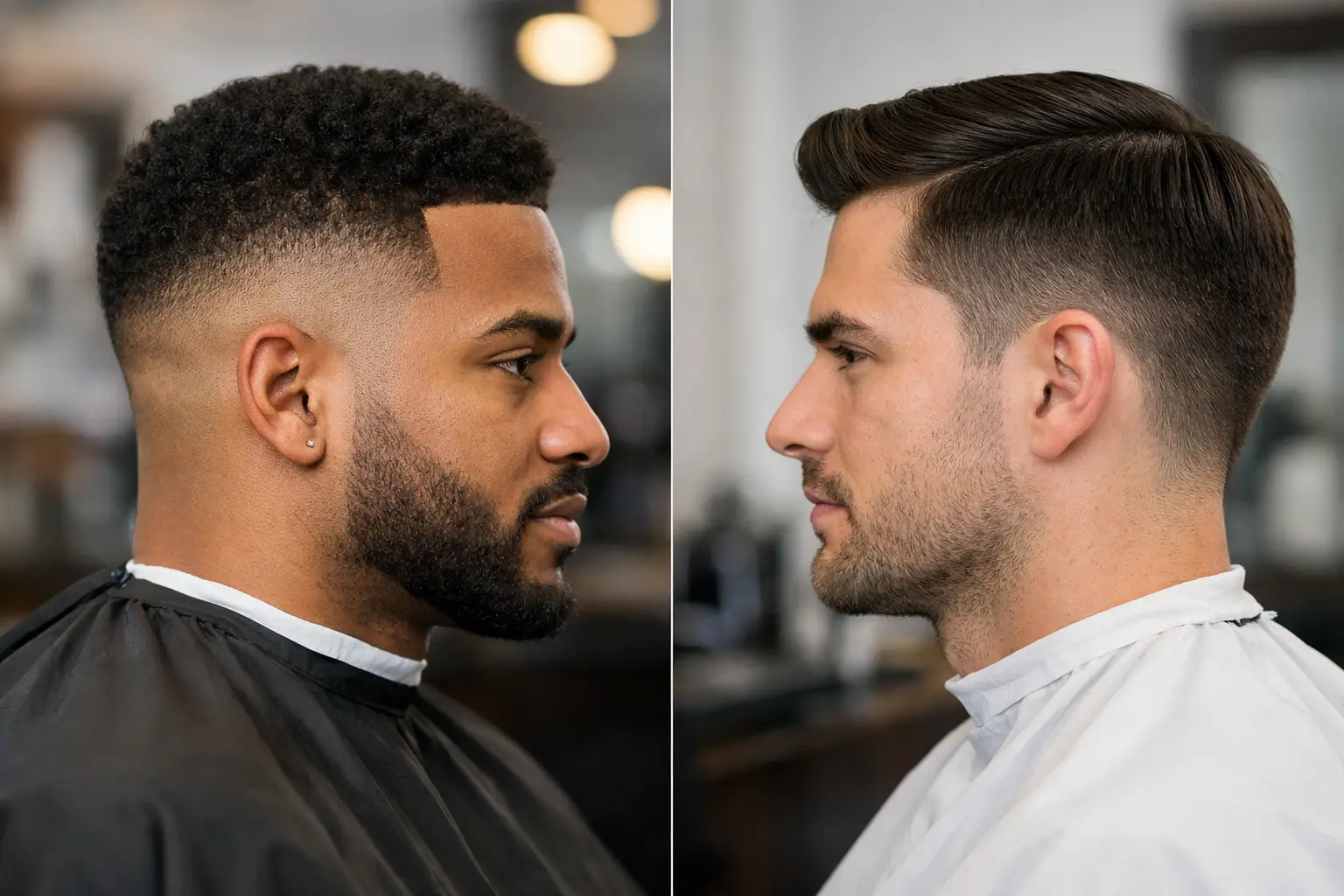
A clean cut can look completely different depending on what happens around the ears and neckline. The fade vs taper difference comes down to placement, contrast, and how much of the sides transition from hair to skin. Both are barbershop staples. Neither is automatically better. The right call depends on your hair, your work routine, and how sharp you want the cut to look between appointments.
What Is a Fade?
A fade is a gradual blend that removes noticeable weight from the sides and back of the head. It transitions from longer hair on top into very short hair, often down to skin or near-skin length, over a larger section of the head.
The defining trait is its range. A fade changes the entire side profile of the haircut, not just the edges. It creates a clear contrast between the top and sides, which gives the cut a crisp, modern finish.
A barber can build a fade at different heights. A low fade begins just above the ear and keeps more dark hair around the temple and occipital area. A mid fade sits closer to the middle of the side panel for a balanced, versatile look. A high fade rises quickly toward the temple, exposing more skin and delivering the strongest contrast.
There is also a difference in how close the blend goes. A skin fade, sometimes called a bald fade, blends down to the skin. A zero fade may leave the faintest amount of stubble. A clipper fade can stop at a short guard length for men who want the shape of a fade without showing scalp.
What Is a Taper?
A taper is more restrained. Instead of blending most of the sides and back, it gradually shortens the hair only around the sideburns and neckline. The body of the haircut stays fuller and more natural.
Think of a taper as refined edge work. The hair around the ear is cleaned up, the neckline is softened or sharpened according to preference, and the overall cut keeps its weight. It can make a classic scissor cut, side part, pompadour, textured crop, or longer business style look finished without changing its basic silhouette.
A traditional taper does not need to reach skin. It often moves from short hair at the edges into a longer length smoothly enough that it does not look like a dramatic fade. That quieter transition is exactly why it works for men who want polish without an aggressive contrast.
Fade vs Taper Difference: The Fast Answer
The most direct answer is simple: a fade affects a larger area of the sides and back, while a taper focuses on the sideburns and nape.
A fade is the stronger visual statement. It removes more bulk, adds more separation between the top and sides, and usually looks sharper immediately after the cut. A taper preserves more hair around the head, creates a classic outline, and tends to grow out with less obvious change.
The terms are sometimes used loosely in everyday barbershop conversation. A client may ask for a “taper fade,” and that can mean a low fade with tapered details at the neck and sideburns. This is why a good barber will ask where you want the blend to begin, how short you want it at the bottom, and whether you want skin showing.
The name matters less than the finished result. A clear consultation prevents the classic problem of asking for a taper and leaving with the sides taken much tighter than expected.
How Each Cut Changes Your Look
A fade puts attention on the top of the haircut. With the sides closely blended, curls, waves, texture, length, or a styled part on top become more prominent. It is a strong option for men who want a clean athletic look, a sharper profile, or less weight around the sides.
It can also help thick, dense hair feel more controlled. When the sides puff out quickly, a well-placed fade removes excess volume and keeps the head shape balanced. For men with a rounder face, a mid or high fade can add visual height and make the face appear more defined. The trade-off is that an overly high fade can feel severe if your hairline is receding or if you prefer a more conservative style.
A taper keeps the haircut softer and more traditional. It works especially well when the top and sides are meant to flow together, such as with a side part, comb-over, medium-length scissor cut, or natural curls. It can suit professional environments where you want to look groomed without making the haircut the center of attention.
For men with a narrow or longer face, the fuller side profile of a taper can be more flattering than a high fade. It keeps visual width where a tight fade may make the face look longer. A taper also gives a barber more room to preserve natural density around the temples and crown.
Maintenance Is Part of the Decision
A fresh skin fade is hard to beat for clean detail, but it has a shorter peak window. Hair growth becomes visible quickly when the contrast is high. Most men who wear a skin fade or high fade every week will want a cleanup every two to three weeks, depending on how precise they like the outline.
Low and mid fades can stretch a little longer, especially if the blend leaves some shadow at the bottom. Still, the sharper the fade, the more regularly it needs attention.
A taper is usually easier to live with if your schedule is packed or you prefer more time between cuts. Because it holds more length through the sides, the grow-out is less dramatic. Many clients can go three to five weeks before the shape loses its clean finish.
That does not mean a taper is maintenance-free. Neck hair and sideburns still grow. If you keep a beard, the taper should be balanced with your beard line so the transition from haircut to facial hair looks intentional rather than disconnected.
Choosing Based on Your Hair and Routine
Hair texture plays a real role. A fade can look excellent on straight, wavy, curly, and coily hair, but the blend must be adjusted to the way your hair grows. Cowlicks around the crown, uneven density, and a strong growth pattern near the temples can change where a fade should sit.
For thick or coarse hair, a fade often removes bulk and creates a more controlled profile. For fine hair, a low fade or low taper may be smarter than taking the sides too high, since retaining some density can make the overall haircut look fuller.
Your daily styling habits matter too. If you use product, brush your hair into a side part, or prefer a classic barbershop finish, a taper can support that style without fighting it. If you wear a textured crop, curls forward, a quiff, or a shorter modern style, a fade can give the top more impact.
Your job should not dictate your haircut, but your environment can guide the level of contrast. A low fade is often the middle ground for professionals who want a current look that still feels controlled. A clean taper is the dependable choice when understated grooming is the goal. High skin fades are best for men who want the cut to look deliberately bold and are willing to maintain it.
What to Ask Your Barber For
Avoid relying only on a photo or a single word. Tell your barber what you want the haircut to do. You might say you want the sides tight but not too high, more fullness around the temple, or a clean neckline that still grows out naturally.
If you want a fade, specify the height: low, mid, or high. Then say whether you want skin, stubble, or a short clipper length at the bottom. If you want a taper, say that you want the blend kept at the sideburns and neckline, with weight left through the sides.
Bring up your usual appointment schedule as well. A barber can recommend a lower, softer blend if you only come in once a month, or a tighter finish if you return frequently. Precision is not just about how a cut looks in the chair. It is about how it wears after two weeks of real life.
At Omar’s Barbershop, the best result starts with that conversation. A fade or taper should fit your head shape, hair pattern, beard, and routine - not simply follow the last style you saw online.
Choose the cut you will feel confident wearing on an ordinary Tuesday, not just the one that looks strongest in a freshly finished photo. When the blend is placed correctly and maintained at the right interval, both a fade and a taper can carry the same message: you take care of the details.