
What Haircut Suits My Face? A Barber’s Method
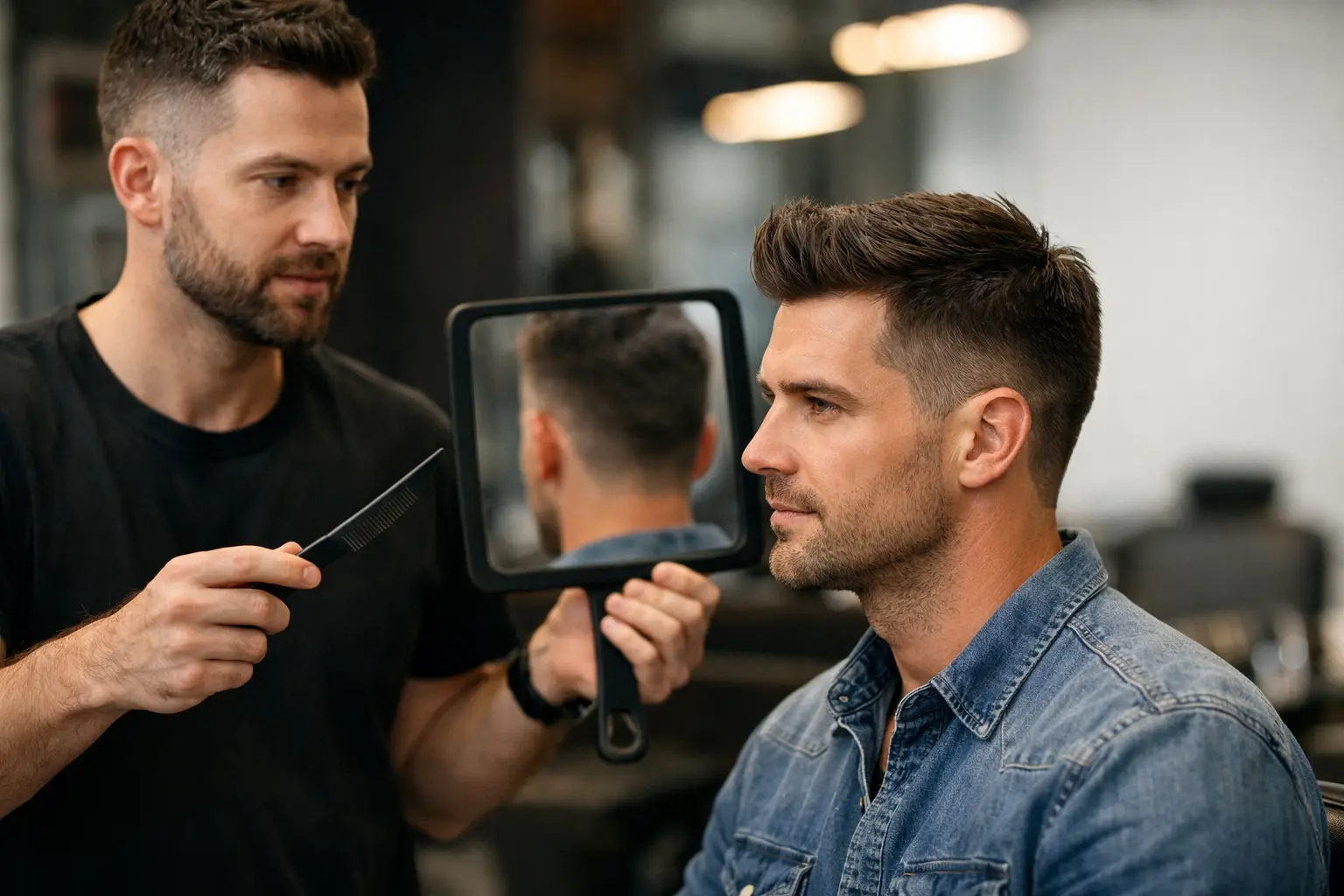
A great cut can make a strong jaw look sharper, add balance to a longer face, or clean up proportions that have felt slightly off for years. If you have asked, “what haircut suits my face,” the answer is not found in a single chart. Your face shape matters, but so do your hairline, density, growth pattern, beard, and how much time you are willing to spend styling each morning.
The right barber does not force every client into the same fade or trend. He reads the whole picture, then builds a cut that looks intentional from the chair to the end of the workday.
What Haircut Suits My Face? Start With Proportion
Face shape is a useful starting point, not a rulebook. Most men do not fit perfectly into one category, and small details often matter more than labels. A high forehead, a prominent chin, a receding temple area, or a full beard can change the visual balance completely.
Look at your face with your hair pulled back or damp. Pay attention to the widest point, the length from forehead to chin, and the shape of your jaw. Then consider what you want the haircut to do. Some cuts add height. Some create width. Others keep everything clean and close to the head.
A skilled barber uses these choices with purpose. The goal is not to hide your face. It is to give it stronger proportions.
Oval faces: Most cuts are on the table
An oval face is longer than it is wide, with a jaw that is slightly narrower than the forehead. This shape works with a wide range of styles: textured crops, side parts, pompadours, slick backs, crew cuts, and fades.
The trade-off is that too much height on top can make an already long face look stretched. If your face is oval but narrow, keep the sides from being taken excessively tight and avoid piling on unnecessary volume. A low or mid fade with controlled texture often gives a polished, versatile result.
Round faces: Build structure and height
Round faces have softer angles and similar width and length. The best haircuts usually add definition at the temples and height through the top. A quiff, textured crop with lift, side-swept style, or pompadour can create a longer, more angular appearance.
Tight sides can help, especially with a mid or high fade, but the top needs enough length to do its job. A very short buzz cut is low maintenance, but it may emphasize the roundness of the face. That does not mean it is off-limits. It simply needs a clean lineup, a disciplined beard shape, or stronger temple detail to add edge.
Square faces: Keep the strength, soften the extremes
A square face has a broad forehead, a defined jaw, and a fairly even length-to-width ratio. It already has built-in structure, which is why classic cuts tend to work well. Think crew cuts, side parts, short textured tops, and taper fades.
Avoid taking every edge to an extreme if your features are very sharp. A hard, high skin fade combined with a severe square lineup can look overly rigid on some men. A low taper or a bit of texture on top keeps the cut refined without losing the masculine shape that makes a square face stand out.
Oblong or rectangular faces: Avoid too much vertical height
Longer faces benefit from balance at the sides. A medium-length scissor cut, textured fringe, French crop, or a side part with moderate volume can work exceptionally well. These styles reduce the visual length of the face without looking heavy.
The common mistake is pairing a high fade with tall hair on top. That combination pulls the eye upward and can make a long face appear even longer. Keep the fade lower, retain some weight around the sides, and use texture instead of height for movement.
Heart-shaped and triangular faces: Balance the forehead and jaw
A heart-shaped face tends to be wider at the forehead and narrower through the chin. A triangular face is often the reverse, with a stronger jaw and a narrower forehead. Both can look excellent with the right balance, but the approach differs.
For a wider forehead and narrower chin, avoid excessive height and super-tight sides. A medium-length textured style, side sweep, or fringe can soften the upper face. For a stronger jaw and narrower forehead, add controlled volume through the temples and top while avoiding a fade that removes all side width.
Your Hair Type Can Change the Best Answer
The haircut that suits your face must also suit the hair you actually have. A reference photo can show a useful direction, but it cannot account for your cowlick, curl pattern, density, or hairline. This is where rushed haircut decisions usually go wrong.
Straight, thick hair can hold clean lines, structured crops, and strong side parts. Fine hair often looks fuller with texture and a slightly shorter, denser shape rather than long, separated strands. Wavy hair can create natural volume, but it needs a cut that respects its movement instead of fighting it. Curly or coiled hair benefits from deliberate shaping, balanced bulk, and a fade or taper that is blended cleanly into the natural texture.
Your growth pattern matters as much as texture. If the crown pushes hair forward, a barber may leave more length there. If one side grows outward, the blend needs to be adjusted rather than cut identically on both sides. Precision is not always symmetrical. It is making the finished cut look symmetrical once your hair behaves naturally.
The Beard Is Part of the Haircut
For men with facial hair, the haircut and beard should be planned together. A beard can lengthen a round face, strengthen a softer jaw, or add too much length to an already narrow face. The difference is in the outline.
A fuller beard with tight cheek and neck lines can give a rounder face more definition. Men with long faces often look better with some fullness at the sides of the beard and less length at the chin. If your jaw is already strong, a shorter, well-blended beard can keep the overall look clean without making the lower face appear too heavy.
This is why a fade and beard trim should not feel like separate services. The sideburn transition, temple detail, and beard blend determine whether the look feels finished or disconnected.
Choose a Cut You Will Actually Maintain
The sharpest haircut on day one is not always the best haircut for your routine. Skin fades, crisp lineups, and short beard work look exceptional, but they require regular maintenance if you want that just-left-the-shop standard. For many men, that means a visit every one to two weeks.
A classic taper, medium scissor cut, or textured crop usually grows out more forgivingly and may give you more time between appointments. Longer styles can also be flexible, but they demand more styling effort and usually need the right product to stay controlled.
Be honest about your routine. If you spend two minutes getting ready, do not choose a style that needs a blow dryer, brush, and three products to look right. A disciplined cut should make your morning easier, not create another job.
Bring Direction, Not a Demand
Photos are helpful when they show the finish you like: the amount of fade, the shape around the ears, the texture on top, or how the beard connects. Bring two or three examples rather than insisting on one exact copy. Your barber can identify the common details and adapt them to your face and hair.
Tell him what has not worked before. Maybe a high fade made your head look too narrow. Maybe your hair sticks up at the crown. Maybe you like the first week of a cut but hate how it grows out. Those details are more useful than saying, “Just do the usual.”
At Omar’s Barbershop, the standard is not a rushed answer based on a face-shape chart. It is a measured consultation, clean execution, and hand-finished detail built around the man in the chair.
The best haircut is the one that strengthens your natural features, fits your routine, and still looks sharp when you catch your reflection a week later.