
How to Style a Professional Men's Haircut
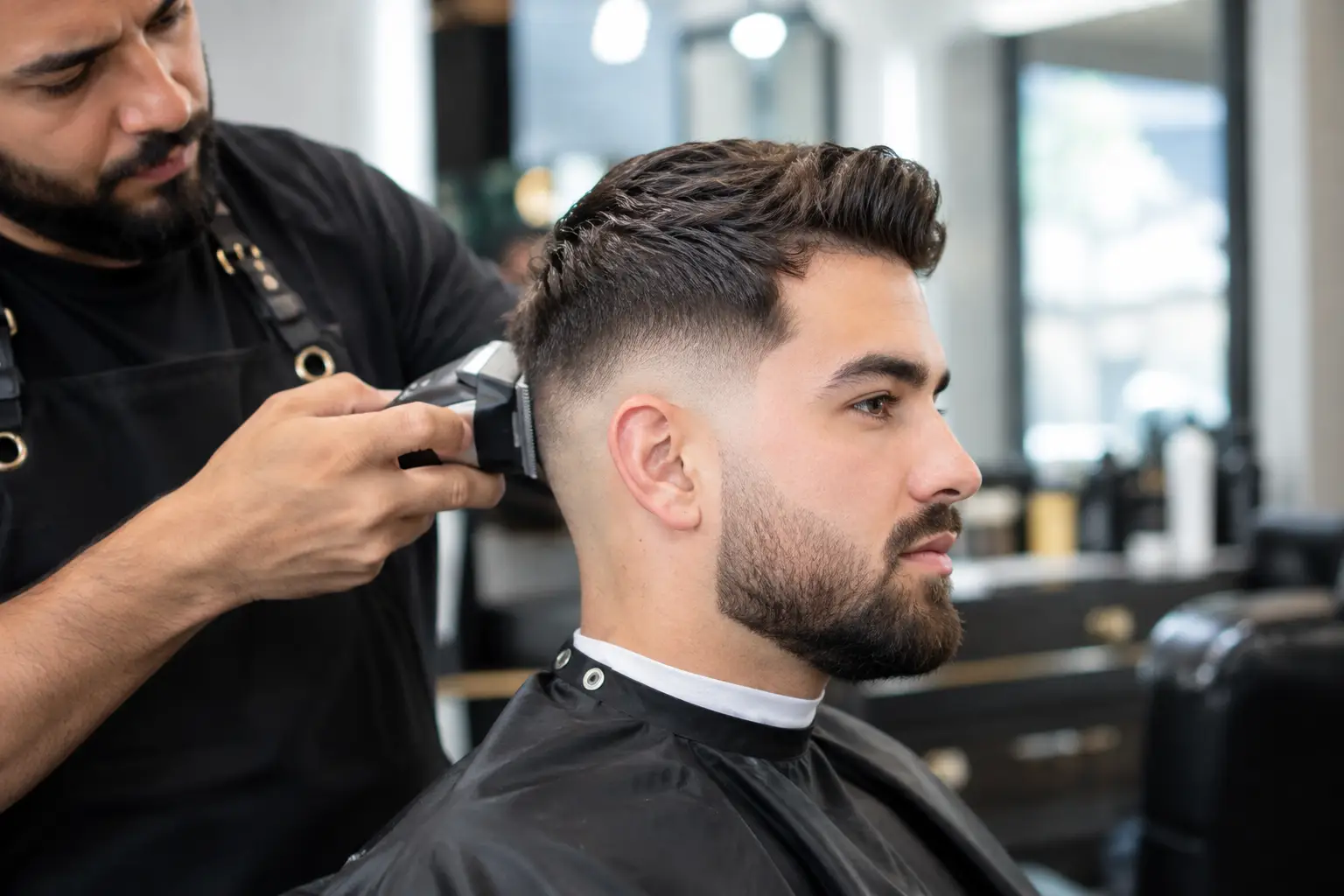
A professional haircut can look sharp when you leave the chair and lose its shape by Tuesday morning if the styling is rushed. Knowing how to style professional mens haircut looks comes down to a disciplined routine: start with the right foundation, use less product than you think, and finish with control rather than shine alone.
The goal is not to make your hair look overworked. It is to make a clean cut hold its intended shape through meetings, commutes, and long days without looking stiff, greasy, or flat. Whether you wear a side part, textured crop, taper, pompadour, or a clean fade with length on top, the principles are the same.
Start With the Haircut, Not the Product
Styling is easier when the cut was built for the way you actually wear your hair. A strong professional haircut has balance: clean weight removal around the sides, intentional length on top, and a shape that works with your natural growth pattern. Product can enhance that work, but it cannot correct an awkward cowlick, uneven bulk, or a style that demands more length than you have.
At your appointment, be direct about your daily routine. Mention whether you wear a hat, how much time you have in the morning, whether your hair is fine or thick, and if you prefer a natural finish or a more defined look. A professional who works in a client-facing office may need a controlled side-part style. Someone moving between job sites may want a textured crop that still looks good after a little movement.
The right cut should look intentional with minimal effort. That is one of the clearest signs of skilled barbering.
Prep Hair While It Is Damp
Most men use styling product at the wrong stage. Applying it to soaking-wet hair dilutes the hold and leaves the shape unpredictable. Applying it to completely dry hair can make distribution difficult, especially with thick or coarse hair.
After showering, towel-dry gently until your hair is damp, not dripping. This is the moment to establish direction. Comb or brush your hair into the general shape you want before adding product. If you normally part your hair to the left, set that part while the hair is damp. If you wear texture forward, guide the top forward and slightly upward now.
For men with stubborn growth patterns, a blow dryer is not optional grooming theater. It is a control tool. Use medium heat and point the airflow in the direction you want the hair to sit. Keep the dryer moving, and use your fingers or a vent brush to create lift at the roots. Finish with a short blast of cool air to help the shape set.
A blow dryer is especially useful for fine hair that falls flat, thick hair that expands at the sides, and side-part styles that need a clean line. It adds volume without forcing you to pile on heavier product.
Choose Product by Finish and Hold
The best product is the one that supports your haircut without announcing itself from across the room. Professional grooming usually favors controlled texture, healthy-looking movement, and a finish appropriate for the setting.
For a matte, natural look, use clay or paste. These products work well for textured crops, short quiffs, and modern cuts with separation on top. Clay usually offers stronger hold and can suit thicker hair, while paste tends to stay more flexible and is easier to restyle during the day.
For a classic side part, comb-over, or polished pompadour, a water-based pomade provides definition and controlled shine. It gives hair a sharper, more traditional finish, particularly when paired with a comb. The trade-off is that too much can make fine hair look thin or leave thick hair looking overly slick.
Cream is often the better choice for men who want light control and a softer result. It is useful for medium-length hair, loose waves, and styles where movement matters more than structure. If your hair already has plenty of volume, cream can keep it refined without adding unnecessary stiffness.
Sea salt spray can add grip before blow-drying, but use it with restraint. It can give fine or straight hair useful texture, yet frequent heavy use may leave hair feeling dry. A small amount is usually enough.
How to Style a Professional Men's Haircut Step by Step
Start with an amount of product no larger than a dime for short hair. Men with longer or very thick hair may need a little more, but the smart move is always to add product gradually. You can build hold. You cannot easily remove excess without starting over.
Rub the product between your palms until it is warm and evenly spread. Then work it through the hair from back to front. Beginning at the back prevents the front hairline from absorbing too much product, which is where most styles start to look heavy or greasy.
Once the product is distributed, shape the style with purpose. Use your fingers for a natural, textured finish. Use a comb for cleaner lines, a distinct side part, or a classic executive look. If you use both, apply product with your hands first, then use the comb only to refine the final structure.
For textured styles, avoid squeezing every section into the same direction. Lift small pieces at the front and crown, then leave some variation. Texture should look controlled, not chaotic.
For side parts and comb-overs, define the part gently rather than carving a hard trench into the scalp. Comb the longer side across and slightly back, keeping the sides close to the head. The result should look deliberate but wearable, not like a helmet.
For hair with a quiff or elevated front, dry the roots upward first and then direct the front back or to the side. Add product after the shape is established. Trying to create volume with product alone often causes the front to collapse by midday.
Match the Finish to the Room
A professional haircut should suit the setting as well as your face shape and hair type. A high-shine pomade can look excellent for a formal event, an evening out, or a traditional business style. In a more casual office, a matte finish often feels current and easier to wear.
The same cut can shift its character with a small adjustment. A taper with a side part can be combed neatly for a presentation, then loosened with your fingertips for the weekend. A fade with textured length on top can look polished with a controlled matte paste or more relaxed with a lighter cream.
This is why a haircut should never be treated as a fixed look. It is the framework. Your styling routine decides how formal, modern, or relaxed that framework becomes.
Keep the Details Clean
Your style is not finished when the top looks right. Check the hair around the temples, sideburns, neckline, and beard. A clean haircut loses impact when the beard is unshaped or the sideburns no longer connect cleanly to the fade.
Do not chase perfection with repeated brushing throughout the day. If the hair moves, use a small amount of water on your hands and reset the surface lightly. For styles with stronger hold, carry a pocket comb instead of adding more product. Reapplying product over dry, product-heavy hair is a fast route to buildup.
Wash styling products out regularly. Heavy pomades, clays, and sprays can collect at the scalp and make fresh styling harder the next morning. Shampoo frequency depends on your hair and scalp, but your hair should feel clean enough to respond to your hands and product.
Make the Shape Last Between Appointments
A professional style depends on maintenance. Fades and tapers lose their clean contrast as the sides grow out, while longer styles begin to lose proportion when the top gets too heavy. Most men benefit from a regular schedule based on how quickly their hair grows and how precise they want the finish to remain.
At Omar's Barbershop, the standard is simple: a good haircut should be hand-finished with enough detail that styling it at home feels straightforward. When the foundation is precise, your morning routine becomes less about fixing your hair and more about setting the tone for the day.
Before you head out, take ten seconds in natural light. Check the profile, the crown, and the line where your hairstyle meets your beard. That small final check is often the difference between hair that is merely done and a look that feels fully put together.