
Barber Shop vs Chain Haircut: What Wins?
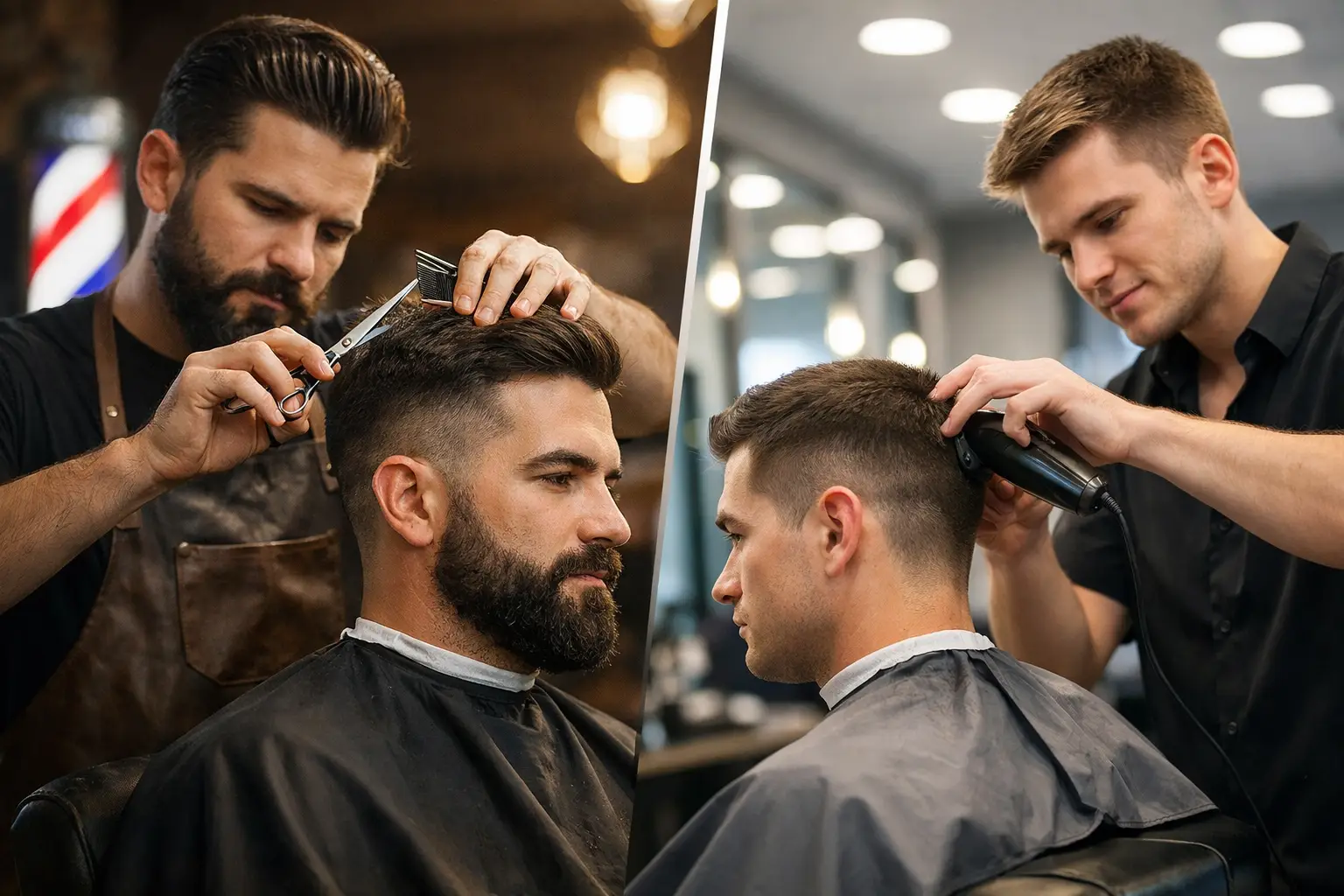
You can tell a lot about a haircut in the first three seconds. The neckline is either clean or rushed. The fade either transitions smoothly or drops off halfway. The beard either frames the face or looks like it was trimmed by guesswork. That is where the real barber shop vs chain haircut decision shows up - not in the price board, but in the mirror.
For men who care about looking sharp at work, on weekends, and everywhere in between, this choice is less about branding and more about standards. A chain haircut can be fast and convenient. A barbershop is built around craft, consistency, and detail. If your haircut is part of your presentation, the difference matters.
Barber shop vs chain haircut: the real difference
At a chain, the system is designed for volume. The goal is to keep the line moving, turn over chairs quickly, and deliver a basic haircut that fits a broad range of customers. That model works for simple trims and last-minute cleanups, especially when expectations are low and speed is the top priority.
A barbershop operates differently. The service is centered on the cut itself - how your hair grows, how your fade should sit against your head shape, how your beard connects to the haircut, and how the finish will look a week from now, not just when you stand up from the chair. A skilled barber is not working from a generic script. He is reading the details and adjusting the service to you.
That difference affects almost everything: consultation, clipper work, lineups, taper balance, beard detailing, and overall consistency. If you wear fades, keep facial hair, or want a polished finish, a barbershop usually has the stronger advantage.
Where chain haircuts make sense
A fair comparison needs some honesty. Chain haircuts are popular for a reason.
They are often easy to find, the pricing is straightforward, and the process is familiar. If you need a quick trim on short notice, want a basic cut with minimal styling, or are not particular about details, a chain can do the job. For some clients, that is enough.
There is also less pressure to build a relationship. You can walk in, ask for a standard cut, and be out quickly. For someone who sees a haircut as simple maintenance, the chain model may fit their routine just fine.
But this is also where the trade-off starts. Convenience is useful until it starts replacing quality. If you have ever left with an uneven blend, a pushed-back lineup, or a beard trim that changed your shape more than you wanted, you have already felt the cost of a rushed system.
Why barbershops usually deliver a better result
A strong barbershop is built around repeat clients, not one-time traffic. That changes the standard of service.
A barber wants to know how you like your taper, where your crown gets difficult, how much weight to leave on the sides, and whether your beard should stay full or be tightened under the jaw. Those details are not extras. They are the difference between a haircut that looks decent for two days and one that grows out cleanly.
Precision also shows up in the finishing work. Chains often focus on getting the main shape done fast. A barbershop is more likely to take the extra time on edges, detail around the ears, refine the transition points, and check the cut from every angle. That unrushed approach matters most on skin fades, beard blends, textured crops, pompadours, and any style where structure needs to stay sharp.
For many men, the biggest advantage is consistency. Once a barber knows your preferences, you stop having to explain the same haircut every visit. That saves time in a different way. It removes uncertainty.
The beard factor changes everything
If you wear a beard, the barber shop vs chain haircut comparison becomes even clearer.
At many chain locations, beard work is limited, secondary, or handled as a quick add-on. In a barbershop, beard trimming is often part of the craft. The barber understands cheek lines, neck cleanup, bulk removal, symmetry, and how the beard should connect with the sideburn area and haircut.
That matters because a haircut and beard should work together. A clean fade with a poorly shaped beard looks unfinished. A strong barber treats the full profile as one look.
Straight razor service and finishing standards
Another separator is classic service. Clean razor lineups, hot towel preparation, and straight razor shaves are not just old-school touches. They reflect a different level of care and technical control.
Not every client wants a shave, but the presence of those services says something about the shop. It signals that grooming is treated as a craft, not just a transaction. In a premium neighborhood barbershop, that standard usually carries into every cut.
What you are really paying for
People often assume chain haircuts save money. Sometimes they do at the register. But the better question is whether they save value.
If a cheaper haircut grows out badly, needs to be fixed elsewhere, or leaves you less confident in how you look, the lower price does not mean much. A better cut often lasts longer, sits better, and requires fewer corrections between visits. That can make it the smarter spend over time.
You are also paying for judgment. A seasoned barber knows when not to take too much off the crown, how to avoid creating shelves in a fade, and how to keep your hairline natural instead of forcing a sharp line that will look off in a few days. That kind of restraint is part of professional discipline.
This does not mean every independent barbershop is excellent or every chain is poor. Skill still depends on the individual professional. But as a model, barbershops are generally built to reward craftsmanship more than speed.
Who should choose a barber shop over a chain haircut?
If your haircut is simple, you are not particular, and you mainly want speed, a chain may work. There is no reason to overcomplicate it.
But if you care about clean fades, sharp lineups, beard shaping, reliable results, or having one professional who understands your look, a barbershop is the better fit. The same goes for dads bringing in sons who need more than a rushed buzz cut, or professionals who want to walk into meetings looking polished without wondering how the back turned out.
This is especially true if your hair has specific challenges. Cowlicks, growth patterns, thick texture, thinning areas, or a beard that needs balancing all benefit from experience and patience. Those are situations where detail work matters more than speed.
How to tell if a barbershop is actually worth it
Not every shop that uses the word premium earns it. Look at the signs that reflect real standards.
A strong barbershop pays attention to consultation, not just clipper guards. The cuts look clean across different hair types and ages. The beard work is deliberate. Reviews mention consistency, professionalism, and detail. The environment feels focused, not chaotic. Walk-ins and online booking are helpful, but they should support the service, not replace it.
In Anaheim, that is part of why clients look for a shop with a strong local reputation and barbers who take their time. Omar's Barbershop has built that kind of trust by focusing on precision cuts, clean finishes, and service that does not feel rushed.
The better question is not price - it is standard
When men compare a barber shop vs chain haircut, they often start with cost and convenience. That makes sense. But the better question is what standard you want every time you sit in the chair.
If grooming is just a box to check, speed may be enough. If your haircut is part of how you carry yourself, then precision, consistency, and personal attention are worth protecting. A good barber does more than cut hair. He helps you maintain an image that looks intentional.
The right chair is the one that respects the details, because the details are what people notice long after the appointment ends.