
How Skilled Barbers Correct Rushed Chain Cuts
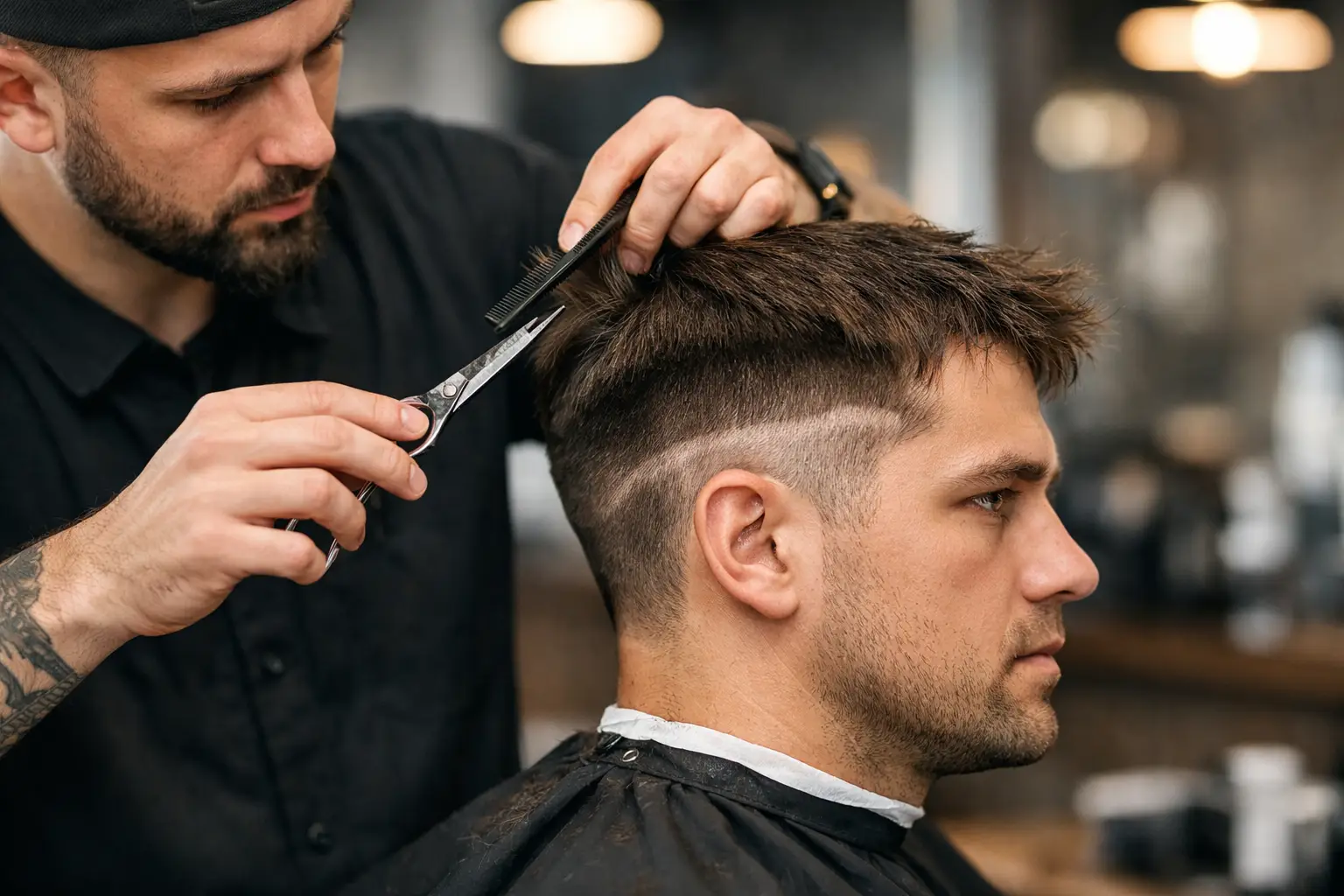
A rushed haircut usually announces itself before you say a word. The fade looks heavy on one side, the neckline climbs too high, the blend carries a visible shelf, or the top was cut without regard for how your hair actually lays. Knowing how barbers correct rushed chain cuts starts with one truth: a repair is not about covering a mistake quickly. It is about assessing what can be improved now without creating a bigger problem two weeks from now.
A good barber does not panic-cut. He studies the shape, listens to what happened, and builds a clean plan around your current length, growth pattern, and preferred style. Some corrections can be completed in one appointment. Others need patience, especially when a rushed cut has taken too much length or pushed a hairline beyond its natural position.
The First Correction Happens in the Consultation
Before clippers come out, an experienced barber looks at the cut from every angle. He checks the fade transition, the weight around the parietal ridge, the balance at both temples, the crown, and the connection between the sides and top. What looks like a simple uneven fade can actually be caused by a crooked guideline, poor head positioning during the original cut, or an attempt to blend hair that was already cut too short.
This is where details matter. A barber will ask how you normally style your hair, whether you wear a hat for work, how recently the cut was done, and what you dislike most when you look in the mirror. The answer is not always "take it shorter." If the top is already too short, removing more length from the sides may make the proportions worse. If the lineup is too sharp or too far back, the right move may be to soften it and let it grow back naturally.
A precise consultation also sets honest expectations. A quality barber should tell you whether the cut can be fully repaired today, improved substantially today, or needs a grow-out plan. That straight answer protects your hair and keeps you from chasing a perfect correction with increasingly shorter cuts.
How Barbers Correct Rushed Chain Cuts
The repair itself depends on the mistake. Most rushed chain cuts have one or more of the same issues: uneven blending, bulky areas, inconsistent length, weak detailing, or a shape that ignores the client’s head and hair texture. The correction should address the root of the problem, not just the most obvious line.
Removing harsh weight without hollowing the cut
A common complaint is the dark band sitting above a skin fade or taper. This happens when a barber moves too quickly through the clipper guards and leaves excess weight where the hair should transition gradually. Correcting that line requires controlled clipper work, careful lever adjustment, and repeated visual checks from both sides.
The temptation is to erase the line aggressively. But going too high can hollow out the sides and disconnect the fade from the top. A skilled barber works in small sections, softening the weight while preserving the silhouette. The result should look clean in natural light, not only under the shop chair.
Rebalancing an uneven fade
One side of the head often grows differently than the other. Add a rushed service, and it is easy to leave one fade higher, darker, or tighter than the other. A barber corrects this by comparing fixed reference points: the temple area, the arch above the ear, the occipital bone, and the transition into the crown.
Balance does not always mean making both sides identical at every millimeter. Natural asymmetry exists. The goal is a fade that looks even when you face forward, turn your head, and wear your hair the way you normally do. That takes a trained eye, not a fast pass with a trimmer.
Restoring shape to the top
A rushed cut frequently treats the top as an afterthought. It may be cut too flat, thinned too heavily, or left disconnected from the sides. The repair begins by determining what length remains and how it can be directed.
For straight or fine hair, the barber may preserve density and use controlled point cutting to bring back movement. For thick hair, selective weight removal can reduce the helmet effect without making the top frizzy or uneven. Curly and textured hair need their own approach, since shrinkage and curl direction can make a cut look different once it dries.
Sometimes the best correction is styling support rather than more cutting. A proper blow-dry direction, a small amount of matte product, or a cleaner side part can make a compromised top look intentional while it gains the length needed for a fuller reset.
Cleaning up line work without damaging the hairline
A sharp lineup should frame the face, not redraw it. When a rushed shop pushes corners back or carves too deeply into the forehead, the damage is most noticeable as the hair grows in. Trying to match an overly high line by pushing it even farther back only compounds the issue.
A professional barber works with the natural hairline. He can remove stray hairs, sharpen the visible edge, and blend the temple area so it looks deliberate. If one corner is already too far back, the better choice may be a balanced, softer finish until the hairline recovers. That is discipline, not a compromise.
The same standard applies to the neck. A natural taper may be preferable when a square or rounded neckline has been cut too high. A clean finish should grow out well, especially for men who cannot come in every week.
Why a Repair Can Require a Grow-Out Plan
There is no clipper guard that replaces hair that has been removed. If a rushed cut took the top too short, created bald spots in a fade, or cut a beard line too deeply, time is part of the solution. The right barber will make the cut look as strong as possible now, then recommend when to return before the new growth becomes awkward.
A grow-out plan is especially useful after a bad high fade, an uneven undercut, or over-thinned hair. During the next appointment, the barber can maintain the neckline and sideburns, clean up the beard, and guide the new length into a better shape. Instead of starting over every time, you move toward a consistent haircut with each visit.
This is also why bringing a reference photo helps, but only if it matches your hair type and maintenance level. A low-maintenance professional cut, a tight skin fade, and a textured crop all grow out differently. The best choice depends on your schedule, your workplace, your styling habits, and how often you want to sit in the chair.
The Details That Separate a Repair From a Quick Fix
A correction should be finished by hand. After the major clipper work is done, a barber checks the blend with a comb, adjusts stray weight with shears, refines the edges, and examines the cut from a normal viewing distance. That final inspection is where small inconsistencies become visible.
Beard work deserves the same attention. If the haircut is repaired but the beard line remains uneven, the overall look still feels unfinished. A measured beard trim can restore balance around the jaw, clean up the cheeks, and connect the grooming work into one polished appearance. For clients who prefer a classic finish, a straight razor neckline and hot towel service can make the reset feel complete without adding unnecessary sharpness.
At Omar's Barbershop, the standard is simple: take the time to get the shape right. A haircut should fit your head, your hair, and the way you carry yourself, not the pace of a crowded queue.
What to Tell Your Barber After a Bad Cut
Clear communication speeds up the repair. Show the areas that bother you most, but describe the issue instead of only asking for a certain guard number. Say that one side feels heavier, the fade sits too high, the top is too flat, or the lineup was pushed back. If you have a photo from before the rushed cut, bring it. It gives your barber a better picture of the shape you want to return to.
Be open to a different solution than the one you imagined. A barber may recommend keeping more length than usual, softening a lineup, or avoiding a skin fade for one appointment while the hair recovers. The strongest repair is the one that looks good now and leaves you in a better position for your next cut.
A bad haircut can make every mirror feel personal. It does not have to stay that way. Give the correction the patience it deserves, choose a barber who explains the plan, and let clean craftsmanship put the confidence back where it belongs.