
How to Ask for a Low Fade at the Barbershop
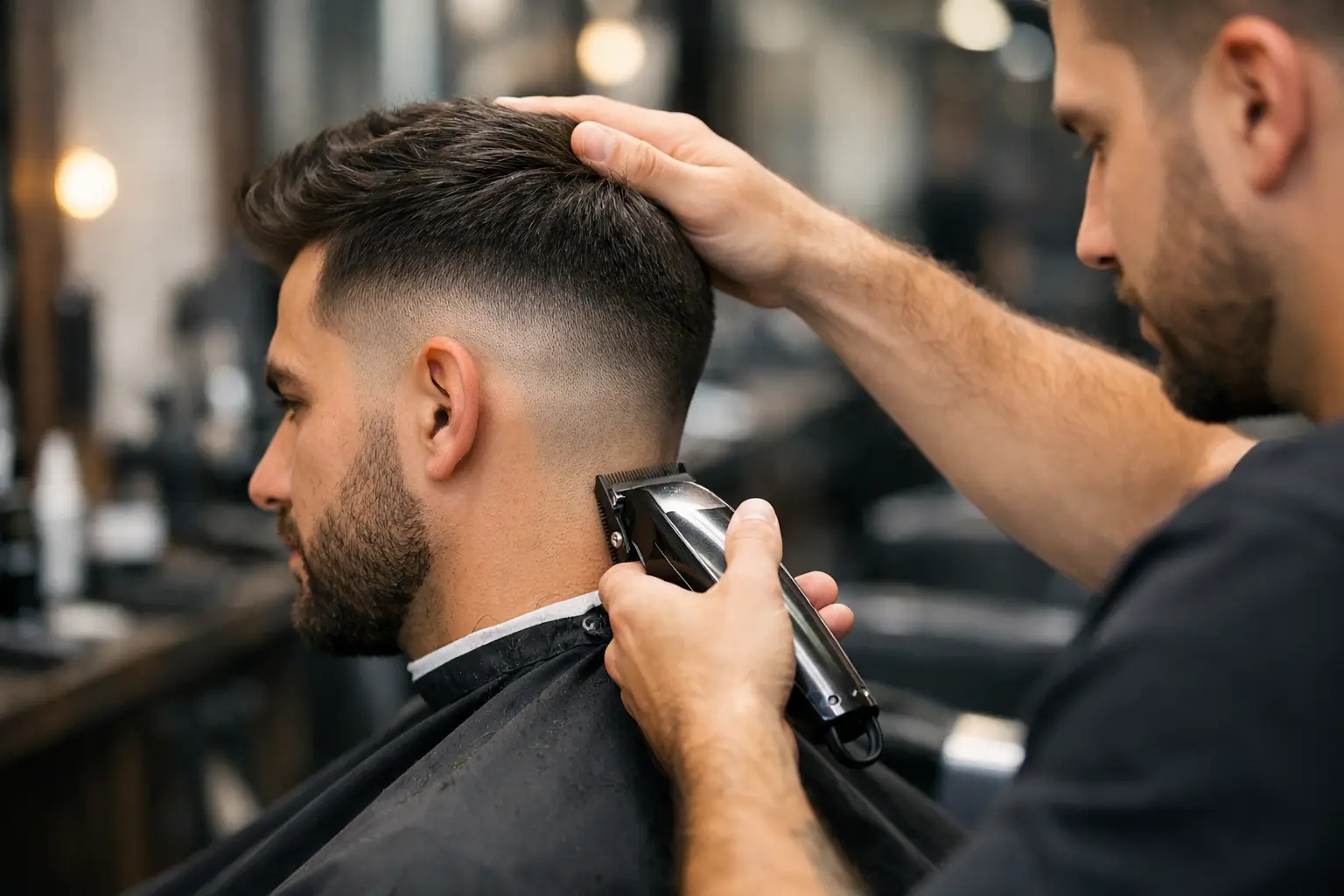
A low fade can look effortless when it is cut correctly. The problem is that many clients sit down, say “low fade,” and leave the rest open to interpretation. If you have been searching for how to ask for low fade, the answer is not a complicated barber vocabulary test. It is knowing which details affect the final shape of your cut.
A good barber should ask questions before the clippers come out. Still, arriving with a clear idea of your preferred length, blend, and finish gives your barber a stronger starting point. That means fewer surprises in the mirror and a cut that works with your hair, beard, head shape, and daily routine.
What a Low Fade Actually Means
A low fade starts low on the head, usually just above the ears and around the lower edge of the back. The shortest area stays below the temple rather than rising high toward the crown. From there, the hair blends gradually into the longer hair on the sides and top.
That placement is what separates it from a mid or high fade. A mid fade typically begins around the temple area. A high fade climbs much closer to the upper sides of the head, creating more contrast and exposing more skin. The low fade is more restrained. It keeps a fuller profile while still delivering a clean, sharpened finish.
It is a strong choice for men who want a polished cut without making the sides look too severe. It can suit professional settings, classic styling, textured crops, curls, pompadours, and longer scissor work on top. The exact result, however, depends on where the fade begins, how short it goes, and how much weight remains above it.
How to Ask for a Low Fade Clearly
Start with the basic request, then add the details that matter. You might say: “I want a low fade that stays below the temple, with enough weight on the sides to keep it natural.” That single sentence tells your barber both the placement and the overall intention.
Next, specify how short you want the fade at the bottom. If you like visible skin near the neckline and around the ears, ask for a low skin fade. If you want a softer, more conservative look, ask for a low fade that begins at a number 0, 0.5, or 1. Guard numbers can vary slightly based on tools and technique, so treat them as a conversation point rather than a fixed rule.
Then address the top. A fade is only one part of the haircut. Tell your barber whether you want the top left long, trimmed with scissors, textured, pushed back, styled forward, or kept short and easy to manage. A low fade with a messy textured top is a different cut from a low fade with a tight side part, even though both use the same fade placement.
A clear request can sound like this:
“I want a low tapering fade, not too high around the temples. Take it down to a 0.5 at the bottom, keep the blend soft, and leave about three inches on top with texture so I can style it forward.”
That is enough direction for a skilled barber to work precisely without turning the appointment into a negotiation.
Know the Difference Between a Low Fade and a Low Taper
These terms are often used interchangeably, but they are not identical. A low fade removes more hair through the lower sides and back, blending from very short into the longer section above. It has a more noticeable transition and a cleaner contrast.
A low taper focuses mainly on the sideburns and neckline. The hair around the ears may be cleaned up, but more length stays through the side panels. If you want your haircut to look natural as it grows out, a low taper may be the better call. If you want a more defined barbershop finish, ask for the low fade.
You can also combine the ideas. “Keep it like a low taper fade” usually means a subtle, low-positioned blend with more fullness than a traditional skin fade. Your barber can show you where the blend will sit before committing to the cut.
Decide How Much Skin You Want to Show
The bottom length changes the personality of the fade. A skin fade is the cleanest and most dramatic option. It can look exceptionally sharp right after an appointment, especially with a crisp lineup and maintained beard. The trade-off is that the growth becomes noticeable sooner, often within a week.
A 0 or 0.5 fade gives you a close finish without taking the blend completely to skin. It still looks clean but grows out with less contrast. Starting at a 1 leaves more coverage and is often a smart choice for clients who prefer a softer profile, have sensitive skin, or do not plan to get cut every two weeks.
Do not assume shorter is always better. The right length depends on your hair density, scalp visibility, beard connection, and maintenance schedule. A professional barber can recommend a starting point that looks intentional now and still holds its shape between visits.
Bring a Reference, but Explain What You Like About It
A photo is useful because words like “low,” “clean,” and “blended” can mean different things to different people. But the photo should start a conversation, not end one. The model in the image may have a different hairline, curl pattern, density, or head shape than you do.
Show the image and identify the detail you want to recreate. Maybe it is the low fade line behind the ear, the dark weight left near the parietal ridge, the soft blend into a beard, or the textured length on top. Saying “I like how low this stays” is more helpful than saying “make me look exactly like this.”
If you do not have a photo, mention a previous haircut that worked. Tell your barber what you liked and what you would change. For example: “Last time the fade came up too high, but I liked the length on top.” That feedback is specific, practical, and easy to use.
Do Not Forget the Neckline, Sideburns, and Beard
A low fade is framed by the details around it. Ask whether you want a natural neckline or a squared neckline. A natural neckline grows out more gently and can be a better fit if you stretch time between appointments. A squared neckline offers a bolder, freshly detailed edge but needs more regular cleanup.
The same applies to the sideburns. If you wear a beard, ask for the fade to transition cleanly into it rather than ending abruptly. A soft beard blend can make the entire cut look more balanced, particularly when the beard carries more weight along the jaw.
For a clean-shaven client, sharp sideburns and a precise edge around the ears can add definition without overdoing the haircut. These small finishing decisions separate a standard clipper cut from a hand-finished barbershop result.
Speak Up Before the Cut Is Finished
The best time to make an adjustment is while you are still in the chair. Check the fade from the front, side, and back when your barber hands you the mirror. If you prefer the blend lower, more shadow near the temples, or a little more length left on top, say so directly.
There is no need to be hesitant. A quality barber wants the cut to fit your standards. Short, respectful feedback such as “Can we keep a little more darkness right here?” gives clear direction. Waiting until you get home only makes a small correction harder to address.
At Omar’s Barbershop, a low fade is treated as more than a guard number and a quick blend. The placement, transition, neckline, and finish are all shaped around the client in the chair. Come in with a reference or a simple plan, trust the consultation, and leave with a cut that looks sharp from every angle.