
A Barber Transformation for an Uneven Fade
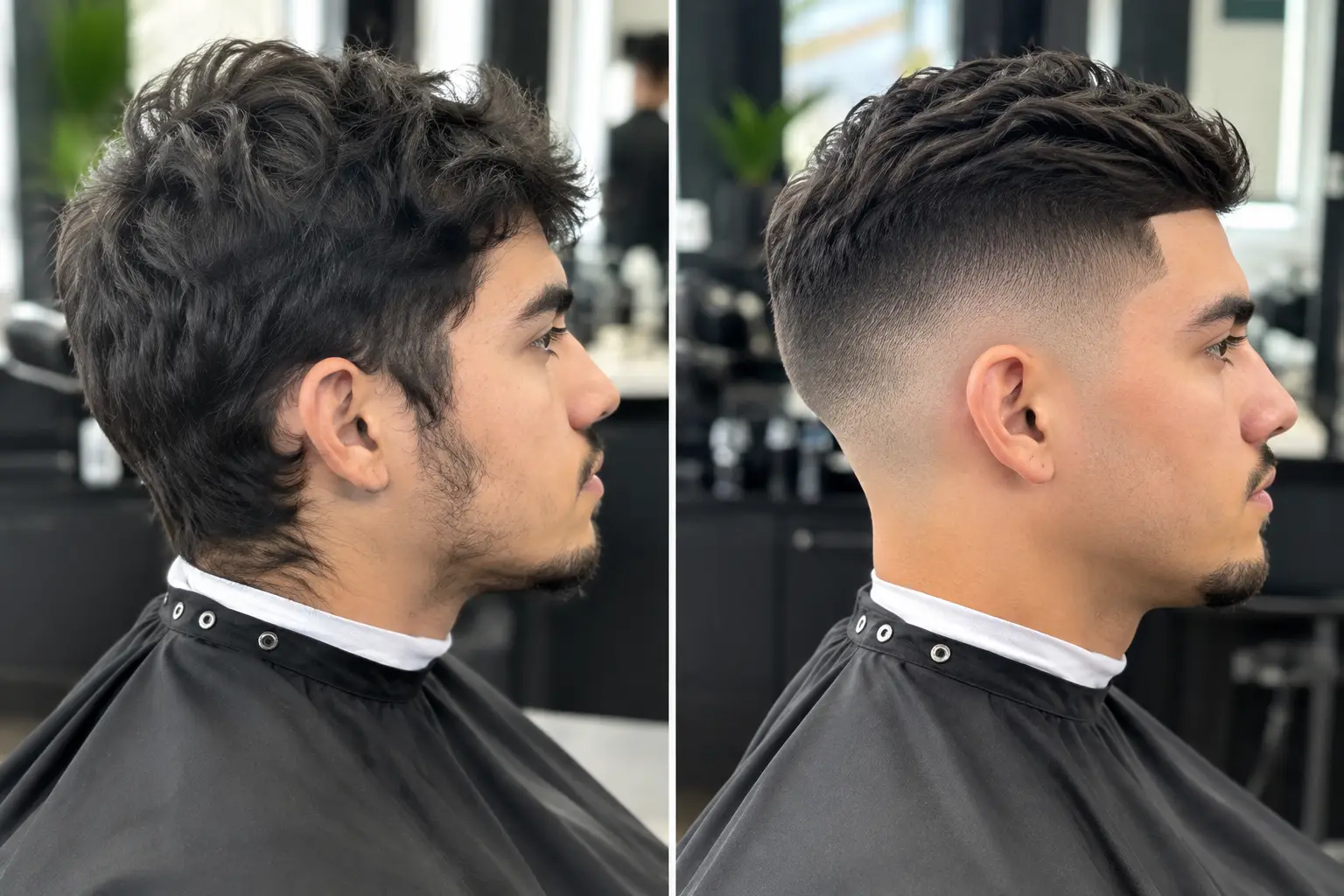
A barber transformation for an uneven fade is not about covering up a bad line with more length. It is about reading the haircut honestly, resetting the shape where needed, and rebuilding the transition with control. When the blend is too high on one side, too dark in the back, or disconnected near the temple, the right correction can bring the whole look back into balance.
An uneven fade is more noticeable than most men realize. It can make the head shape look lopsided, throw off a clean beard line, and leave an otherwise strong haircut looking unfinished. The good news is that a skilled barber can often correct it in one appointment, provided there is enough length in the right places and the plan fits the client’s hair pattern.
What Makes a Fade Look Uneven?
A fade should move gradually from shorter hair near the neckline and around the ears into more density above it. The transition has to be even from left to right, front to back, and through every change in length. When one of those areas is off, the fade loses its structure.
The most common issue is an inconsistent guideline. A guideline is the first line created with the clipper, and it sets the height of the fade. If that line climbs higher behind one ear than the other, the haircut can look tilted. If it is too sharp or too high, there may not be enough room to blend naturally into the hair above.
Dark spots are another common problem. These are areas where heavier hair was not properly blended out, usually around the occipital bone at the back of the head or near the parietal ridge, where the head begins to curve. A dark spot is not always a mistake. Some hair is denser in certain areas. But if it interrupts the flow of the fade, it needs careful clipper work, not random passes with a shorter guard.
Cowlicks, uneven growth patterns, scars, and different hair densities can also create the appearance of an uneven fade. That is why a correction begins with an assessment, not with the clippers switched on at full speed.
The Barber Transformation for an Uneven Fade Starts With Shape
Before changing the fade, a professional barber looks at the entire cut. The crown, top length, front hairline, sideburns, beard, and natural head shape all affect what the finished result should be. Correcting one patch without considering the rest of the haircut can make the problem more obvious.
The first decision is whether to preserve the current fade height or bring both sides to a new, lower baseline. If one side has been faded too high, the barber cannot add hair back that day. The solution may be to carefully raise the opposite side, creating symmetry while protecting enough weight above the fade for a clean transition.
That trade-off matters. A low fade may need to become a mid fade. A mid fade may need a slightly tighter finish. The goal is not to chase an exact label. The goal is a haircut that looks intentional from every angle.
A good correction also respects the top. If the sides are brought in tighter, the top may need light texturizing, a cleaner connection, or a small adjustment to the silhouette. A well-shaped top gives the fade something to support. Without that balance, even a technically clean blend can feel disconnected.
Why Patience Matters More Than a Shorter Guard
When a fade looks patchy, the temptation is to go shorter immediately. Sometimes that is the right call, especially when the client wants a tight skin fade. Often, it is not.
Taking too much hair off too quickly can erase the blend area completely. Instead, the barber works through the transition in controlled steps, using the clipper lever, appropriate guards, and careful movement against the direction of growth. The goal is to soften one line at a time while preserving enough weight to create a smooth graduation.
Hand-finished detail makes the difference here. The barber checks the fade under changing angles, steps back, and compares both sides rather than focusing on a single section. A blend can look clean straight on and still show a heavy corner when the client turns his head. Precision means checking both.
Correcting the Areas Clients Notice First
Most men do not walk in describing an occipital weight line or a parietal ridge. They say, “This side looks higher,” “The back looks dark,” or “My lineup feels off.” Those observations are useful because they point to the areas that affect confidence most.
Around the temples, balance is critical. The fade must sit naturally beneath the front hairline without pushing it back or making the corners look too sharp for the client’s growth pattern. A strong lineup should frame the face, not force a shape that will look uneven again after a few days of growth.
At the back, the neckline and lower blend need to follow the head rather than cut across it harshly. Some clients prefer a natural neckline, while others like a more defined finish. Either can work when it matches the haircut and maintenance routine. What does not work is a neckline that fights the natural growth pattern or exposes a dark band above it.
Sideburns deserve the same attention. They are a small detail with a major effect, especially for men who wear facial hair. A fade that flows cleanly into a beard creates a composed, intentional look. If the beard is left too bulky at the connection point, it can make an otherwise polished haircut seem unfinished.
How to Explain the Problem to Your Barber
You do not need barber terminology to get a better correction. Clear, simple direction is usually enough. Point out the area that feels uneven and say what you notice: one side looks higher, the back feels too heavy, or the fade does not blend into the top.
It also helps to explain what you want to keep. Maybe you like the length on top but want the sides balanced. Maybe you want a lower fade than the one you have now. If you are open to going shorter for a cleaner result, say that too. That gives your barber room to make the right technical decision instead of guessing.
Photos can be useful, but they should be treated as a reference, not a promise. The same fade can look different depending on hair density, head shape, curl pattern, and beard growth. A professional will adapt the style to what your hair can do well.
At Omar’s Barbershop, that consultation is part of the service. A precise cut starts with understanding what happened, what needs to change, and how the haircut should grow out over the next few weeks.
Maintaining a Corrected Fade
Once an uneven fade has been corrected, timing matters. Most fades look their sharpest within the first week, then gradually soften as the sides grow in. For men who prefer a consistently tight, polished finish, regular maintenance keeps small imbalances from becoming major corrections.
Your ideal schedule depends on the fade height, your hair growth rate, and how defined you like the edges. A skin fade and sharp beard connection usually need attention sooner than a longer taper. If you want more time between visits, ask for a blend that grows out softly rather than an aggressively high contrast fade.
At home, keep the routine simple. Use products suited to your top length, avoid over-brushing the sides into an unnatural shape, and do not try to repair a dark spot with a home clipper. One rushed pass can turn a minor touch-up into a haircut that needs time to recover.
A Better Fade Should Look Right From Every Angle
The best correction does not announce itself. It simply makes the haircut look balanced, deliberate, and clean whether you are facing the mirror, sitting in a meeting, or catching your profile in a photo. There is real craft in that restraint.
If your fade feels uneven, do not settle for growing it out under a hat or trying to fix it yourself. Bring it to a barber who will assess the full shape, make the necessary adjustments, and finish every transition with patience. A clean fade is not just shorter hair on the sides. It is structure, proportion, and detail sharpened by hand.