
Drop Fade vs Burst Fade: Which Cut Fits You?
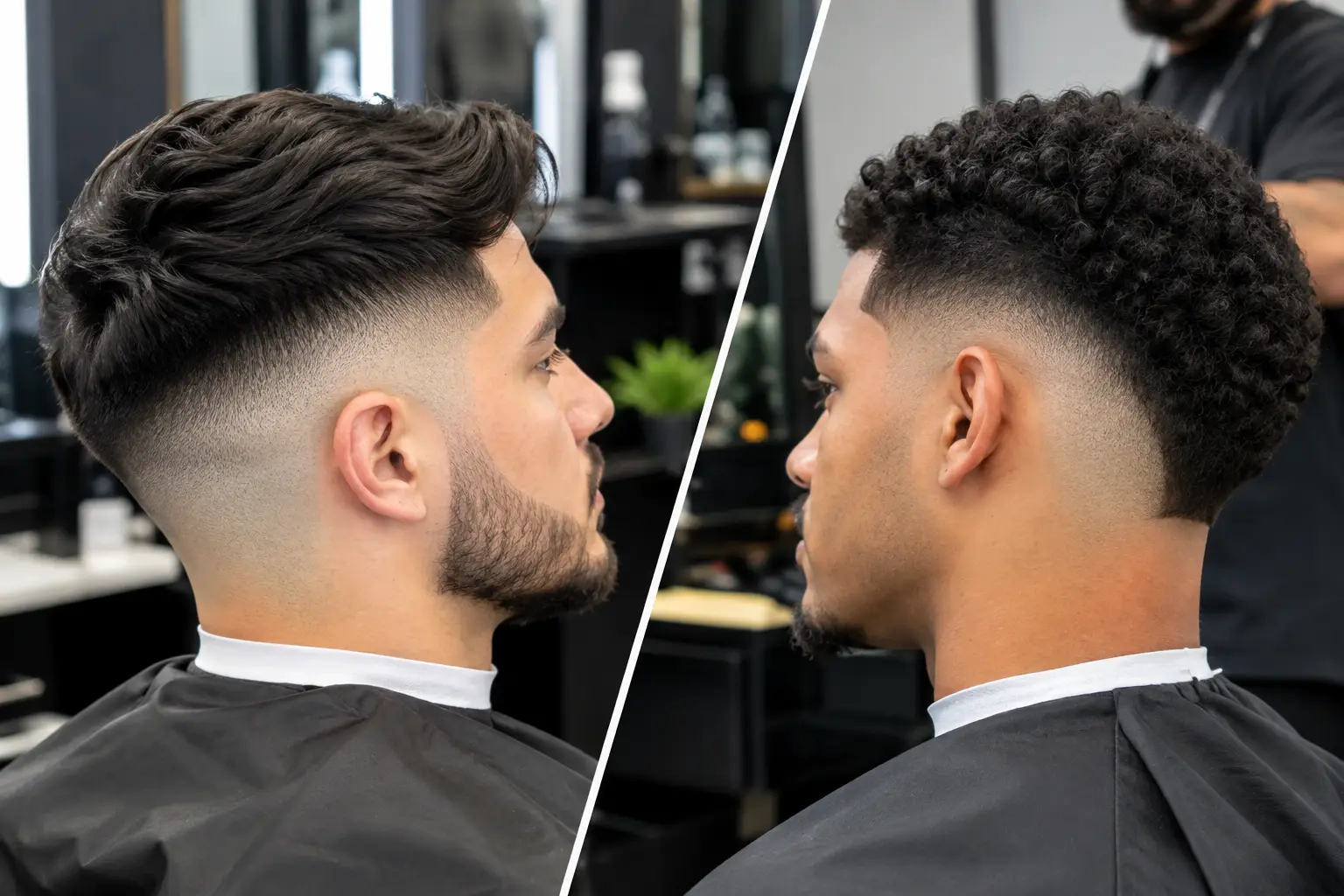
A drop fade vs burst fade decision is not just about how short you want the sides. It changes the silhouette of the entire haircut. One follows the head with a clean, tailored curve. The other creates a sharper arc around the ear and puts more attention on the style above it.
Both cuts can look precise, modern, and professional when the blend is finished by hand. The right choice comes down to your hair type, face shape, preferred length on top, and how bold you want the finished cut to feel.
Drop Fade vs Burst Fade: The Main Difference
A drop fade lowers behind the ear and follows the natural curve of the head toward the nape. From the side, the fade has a gradual downward sweep. It creates a balanced, close-to-the-head finish that works with a wide range of hairstyles, from a clean side part to textured crops, curls, and longer tops.
A burst fade curves tightly around the ear in a rounded shape. It usually leaves more length at the back, especially near the neckline, rather than fading straight across the entire back of the head. That concentrated arc gives the haircut more contrast and more personality. It is often paired with a mohawk, faux hawk, mullet-inspired shape, curls, or heavily textured hair.
The simplest way to picture it: a drop fade blends downward and back, while a burst fade radiates around the ear.
What a Drop Fade Brings to the Cut
The drop fade is a strong choice for men who want a refined haircut without losing modern edge. Because the fade drops behind the ear, it creates a natural contour that can make the head shape look more balanced. It also keeps the transition between the sides, back, and top smooth rather than overly dramatic.
This is one of the most flexible fades a barber can cut. A low drop fade is subtle and polished enough for an office or formal setting. A mid or high drop fade creates more separation and a cleaner profile while still maintaining that controlled curve through the back.
A drop fade works particularly well with a textured fringe, a short crop, loose curls, a combed-back top, or a side-swept style. If you wear facial hair, the lower curve can also be blended thoughtfully into the beard line, giving the profile a more intentional finish.
The trade-off is that a drop fade is less of a statement cut. It looks sharp, but it does not put as much visual focus around the ear or through the back as a burst fade. For many men, that restraint is exactly the appeal.
Who should choose a drop fade?
Choose a drop fade if you want a cut that looks clean from every angle without feeling overly trendy. It is especially dependable for men with straight, wavy, or curly hair who like changing the way they style the top. It also suits clients who want a sharp haircut that can move easily from work to a night out.
For rounder face shapes, a drop fade can be helpful when paired with enough height or texture on top. The curve behind the ear adds structure without making the sides look too harsh. For longer or more angular faces, keeping the fade low or mid usually preserves balance better than taking it too high.
What a Burst Fade Brings to the Cut
A burst fade is more directional. Its rounded fade around the ear creates a distinct frame, which makes the haircut feel more athletic, expressive, and current. The contrast is strongest when there is visible length, volume, or texture above and behind the fade.
The cut is built to support shape. With curls, coils, or thick texture, a burst fade can keep the sides exceptionally clean while allowing the natural volume to do the talking. With a faux hawk or mohawk, it emphasizes the center line of the haircut. With a modern mullet, it gives the sides a finished, deliberate look while preserving movement through the back.
The burst fade can still be tailored. A lower, softer burst fade is more restrained, while a skin burst fade with a crisp line-up creates a much bolder finish. The key is keeping the transition clean. The circular fade needs to sit correctly around the ear, or the shape can look uneven instead of intentional.
Who should choose a burst fade?
Choose a burst fade if your hairstyle has texture, height, or length that deserves a stronger frame. It is an excellent fit for curly hair, thick hair, faux hawks, mohawks, and modern longer-back styles. It also works for men who want their haircut to look sharp without relying on a traditional straight fade around the back.
Face shape matters here. The added width and attention around the sides can complement a longer, narrower face. If your face is round, the burst fade can still work well, but the top should usually have enough height or forward texture to keep the overall shape from looking too wide.
Hair Type Changes the Answer
The best fade is never chosen in isolation. Your barber should look at the direction your hair grows, the density through the crown, the shape of your head, and how much styling you are willing to do each morning.
Straight hair shows every transition clearly. A drop fade often gives straight hair a controlled, understated outline, especially when the top is styled neatly. A burst fade can work just as well, but it usually needs a cut with more texture or a more defined shape on top to look complete.
Wavy hair has enough movement to support either option. A drop fade can make a wavy top feel polished and manageable. A burst fade gives the same texture a more relaxed, high-energy look.
Curly and coily hair often pairs naturally with a burst fade because the clean arc at the sides creates a strong contrast against volume. Still, a drop fade is far from a compromise. It can shape curls into a cleaner, more classic profile, particularly when the goal is definition without excessive exposure around the sides.
Fine or thinning hair calls for a careful approach. Taking the fade too high can make the difference between the sides and top more obvious. A low drop fade is often the safer move because it keeps the haircut connected. The right choice depends on your density and styling plan, not a one-size-fits-all rule.
Maintenance: Which Fade Holds Up Better?
Both styles look their best when maintained consistently. A skin fade begins to soften quickly as hair grows back, while a shadow fade has a little more room before it loses its shape. Most clients who prefer a consistently fresh finish schedule a cleanup every two to three weeks. If you wear the fade lower and leave more weight in the blend, you may be comfortable stretching that timing a little longer.
The drop fade tends to grow out more quietly because its shape follows the natural head contour. Even when it softens, it remains balanced. That makes it a practical option for men who want a premium finish but do not always want a frequent reset.
A burst fade has a more defined outline around the ear, so it can lose its signature shape sooner. The upside is that the fresh-cut effect is hard to beat when the arc, line-up, and neckline are all precise. If you like a haircut that makes a clear statement, the extra maintenance is usually worthwhile.
At home, keep the scalp clean, use a light styling product that suits your hair texture, and avoid trying to sharpen the fade yourself. A small mistake around the ear can change the entire balance of the cut. Let a barber preserve the blend and use your time at home to maintain the top and beard.
How to Ask Your Barber for the Right One
Clear communication gets better results than haircut names alone. Tell your barber whether you want the fade low, mid, or high; whether you prefer skin exposure or a softer shadow; and how you normally wear the top. Mention how often you plan to come back for maintenance.
For a drop fade, you might ask for a low drop fade that stays dark near the crown and blends naturally into a textured top. For a burst fade, explain whether you want the fade tight around the ear with length left behind it, or a cleaner, more conservative version with less contrast.
Bring up your beard as well. A well-executed haircut should not stop at the temple. When the sideburn, fade, and beard transition are considered together, the result looks finished from profile to profile.
A good barber will make recommendations, but the final choice should fit your routine and your style. At Omar's Barbershop, that means taking the time to read the hair, refine the blend, and make sure the details hold up after you leave the chair.
Your haircut should look right when you catch it in the mirror on a busy Monday morning, not only under barbershop lighting. Pick the fade that fits the way you actually wear your hair, then keep it sharp with regular, disciplined maintenance.