
Scissor Cut Versus Clipper Cut Explained
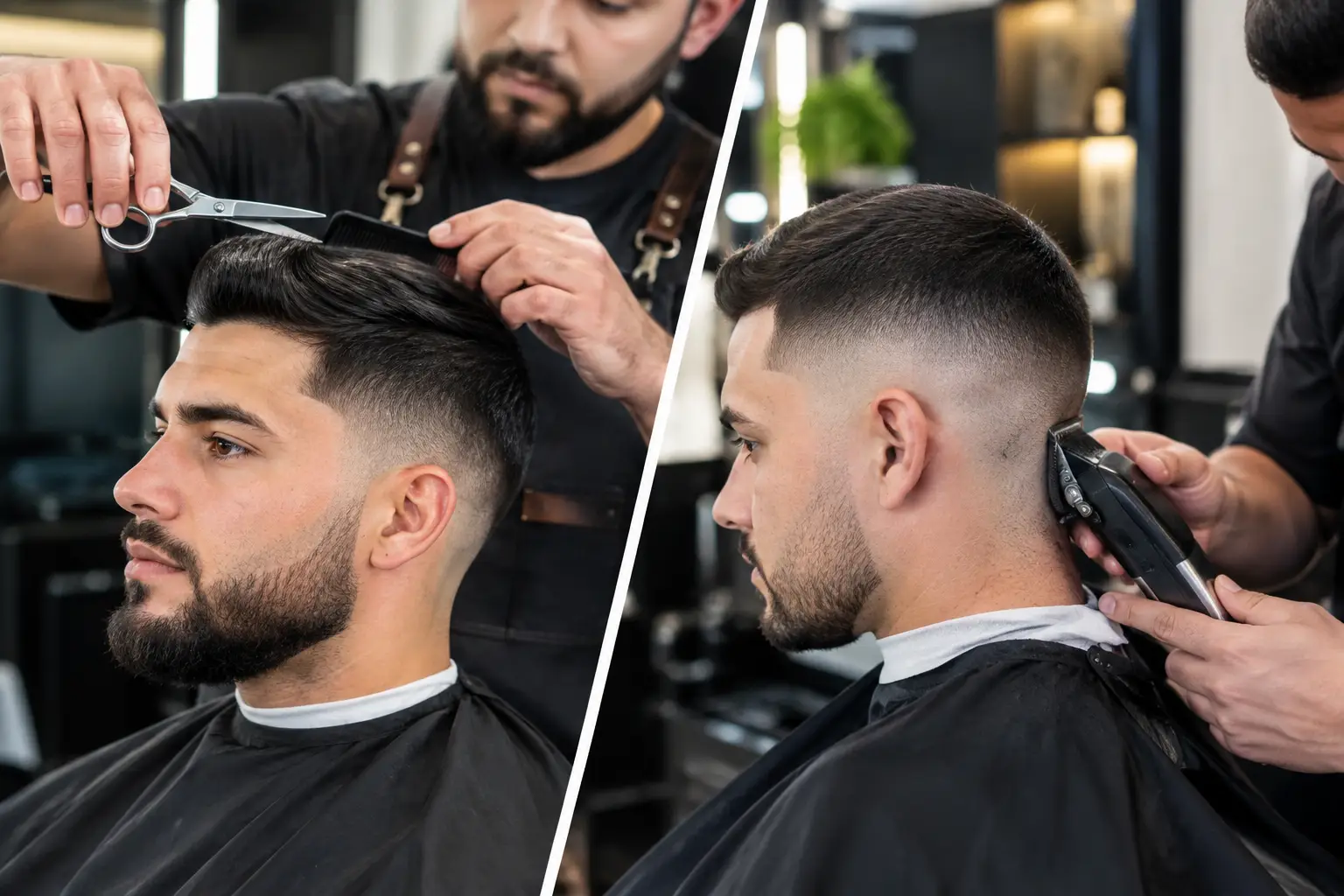
A sharp haircut is not defined by the tool alone. The real difference in a scissor cut versus clipper cut is how the hair moves, how it grows out, and how precisely the finished shape supports your features and routine. A skilled barber chooses the method based on your hair, your preferred length, and the standard you want to maintain between appointments.
For many men, the strongest result is not one or the other. It is a disciplined combination: clippers establish clean structure through the sides and neckline, while scissors refine the top, remove weight, and create a natural finish. Knowing what each technique does makes it easier to ask for the cut you actually want.
What a Scissor Cut Delivers
A scissor cut is built around control, texture, and shape. Rather than taking hair down to a fixed guard length, the barber works section by section to create a tailored result. That makes scissors especially useful on medium to longer hair, on styles with movement, and on cuts where a hard line would look too severe.
The finish is generally softer and more natural. Scissors allow a barber to leave subtle variation in the hair, blend areas without making them look overly uniform, and shape the top to work with your natural growth pattern. If your hair has a wave, cowlick, density changes, or uneven growth, this level of hand-finished adjustment matters.
A scissor cut is often the better choice for textured crops with length, side-swept styles, classic business cuts, longer layered looks, and fuller styles that need controlled volume. It is also valuable when you want the sides cleaned up without exposing too much scalp or creating the tight appearance of a fade.
Growth is another advantage. Because scissors can create a less abrupt transition, the haircut often grows out in a more forgiving way. That does not mean it needs no maintenance. It means the shape can remain presentable longer when you prefer a relaxed, natural silhouette.
What a Clipper Cut Delivers
A clipper cut creates speed, consistency, and crisp visual contrast. Guards set a repeatable length, making clippers the foundation for short cuts, fades, tapers, buzz cuts, and clean work around the perimeter. When the goal is close sides, a sharp neckline, or a precise fade from skin to length, clippers are essential.
The look is more defined. A low, mid, or high fade can change the entire profile of a haircut by tightening the sides and drawing attention upward. Clippers also make it possible to remove bulk efficiently on thick hair before the barber refines the shape with scissors.
Men who keep their hair short usually benefit from clipper work because it provides a clean, disciplined finish that is easy to recognize and maintain. A close crop, classic taper, textured short top, or skin fade depends on controlled clipper technique. The guard number matters, but the blend matters more. A clean fade should move gradually from short to long with no visible weight line interrupting the transition.
Clipper cuts typically require more frequent maintenance when they include a very tight fade or skin finish. Hair grows fast enough that the contrast softens within a few weeks. If you like the sides looking freshly sharpened at all times, plan to keep a regular schedule.
Scissor Cut Versus Clipper Cut: The Real Differences
The most practical difference is not whether one method is better. It is what kind of finish you want.
A scissor cut creates softness, movement, and custom shaping. It gives the barber more freedom to work with the natural behavior of your hair, especially on top and through longer side sections. It is ideal when you want the cut to look styled without looking rigid.
A clipper cut creates precision, short length, and contrast. It is the right tool when you want a fade, taper, close sides, or a uniform short length. The effect is sharper and more structured, particularly when paired with detailed edge work around the temples, ears, and neck.
Texture also separates the two. Scissors can point-cut, layer, and remove internal weight to make thick hair sit better or to give fine hair a fuller appearance. Clippers remove hair more evenly and quickly, which is useful for establishing the foundation but can look blunt if used where softer texture is needed.
Neither approach should be chosen by habit alone. A man with thick, straight hair may want clippers to reduce bulk through the sides, then scissors to keep the top from sitting like a helmet. Someone with wavy hair may prefer mostly scissor work to preserve movement, with a low taper cleaned up by clippers. The haircut should follow the hair, not force the hair into a trend that fights its natural direction.
When a Combination Cut Is Best
Most modern barber cuts use both tools for a reason. Clippers provide the architecture. Scissors provide the finish.
Consider a classic taper with a textured top. The barber may use clippers around the sideburns and neckline, gradually blend the lower sides, then switch to scissors to connect the upper sides to the top. The final detailing might include clipper-over-comb or scissor-over-comb work, both of which allow close control in areas where bulk needs to disappear without sacrificing shape.
The same principle applies to a fade. Clippers create the fade’s progression, but scissors often refine the top and the ridge where longer hair meets the shorter sides. Without that hand-finished work, a cut can look disconnected or too heavy. The best result feels intentional from every angle, not just clean immediately after the cape comes off.
For fathers bringing in a child, the combination approach can also be useful. Clippers can quickly tidy the perimeter and sides, while scissors preserve enough length and softness on top for a natural, age-appropriate style. The right approach depends on comfort, hair type, and how much styling the family wants to manage at home.
Choose Based on Your Hair and Routine
Before your appointment, think beyond the photo you saved. Ask yourself how you wear your hair on a normal weekday, how much product you use, and how often you want to return for cleanup. Those answers often point to the right technique.
Choose a scissor-focused cut if you prefer medium or longer length, natural texture, softer transitions, or a style that grows out with less obvious contrast. It is also a strong choice if your hair has waves, curls, cowlicks, or density that needs thoughtful shaping.
Choose a clipper-focused cut if you want close sides, a fade or taper, a buzz cut, or a bold, crisp outline. It suits men who like a clean, controlled look and are comfortable maintaining that polished finish more often.
Choose a combination cut if you want the precision of a fade or taper without losing movement and shape on top. For many professionals, this is the practical middle ground: clean enough for the office, textured enough to feel current, and tailored enough to look good without excessive styling.
What to Ask Your Barber
Clear communication gets better results than complicated barber terminology. Start with the length you want to keep on top and how tight you want the sides. Then explain whether you like a natural, blended appearance or a more noticeable contrast.
Photos can help, but use them as a reference rather than a demand. The model in the image may have a different hairline, density, curl pattern, or head shape. A professional barber can adapt the direction of the style to suit you while preserving the details you like: a low fade, a fuller crown, a textured front, or a softer side profile.
It also helps to mention what did not work in past cuts. Maybe the top was left too bulky, the fade sat too high, or the neckline grew in too quickly. Those details give your barber a better starting point than simply asking for the same thing again.
At Omar's Barbershop, the goal is never to run a clipper over every head the same way. Precision comes from reading the hair, using the right tool at the right moment, and finishing the details by hand. Bring your usual styling routine and the look you want to maintain, then let the cut be built around both.