
Straight Razor vs Safety Razor: Which Fits You?
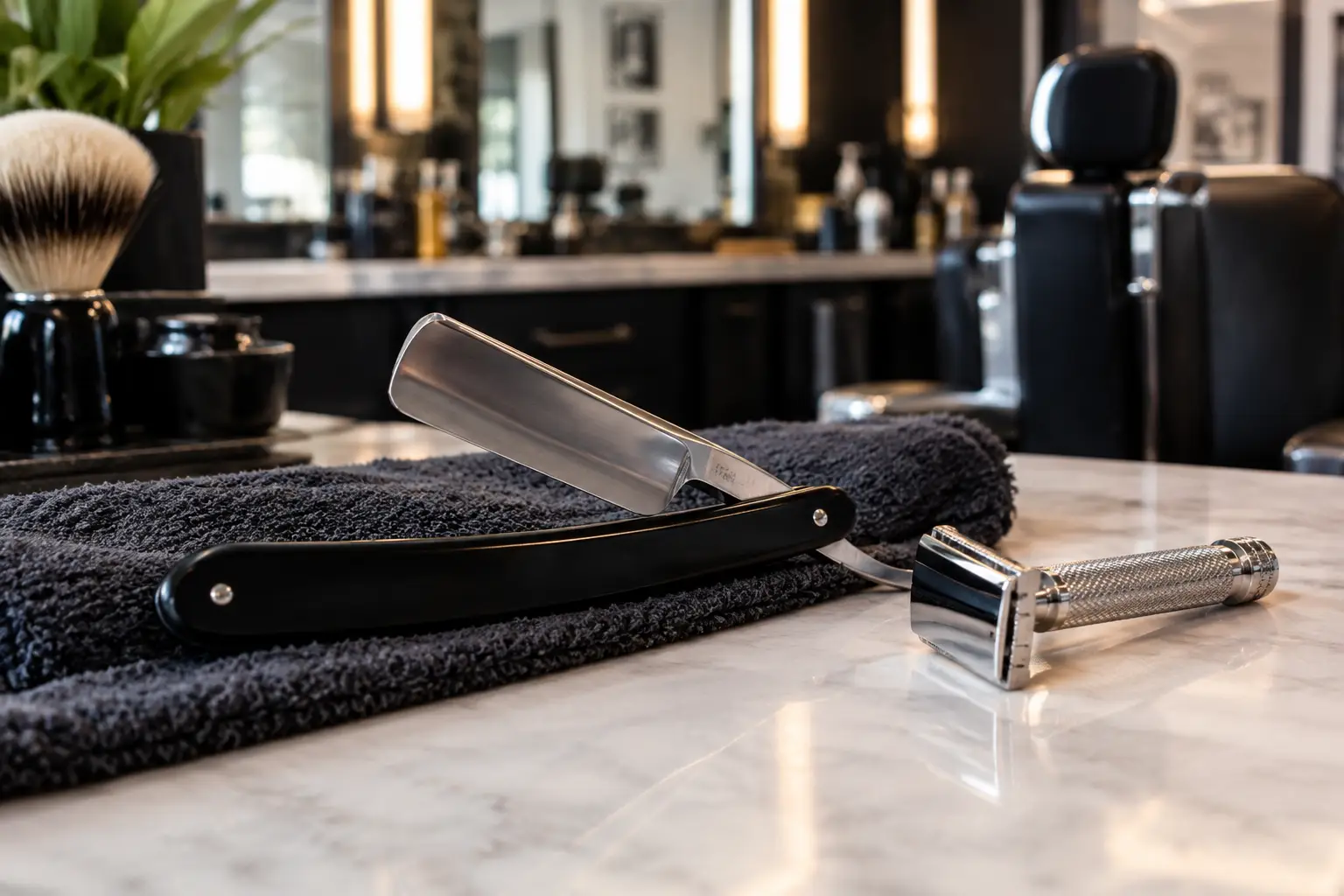
A clean shave is not just about removing stubble. It is about the finish along the jaw, the comfort of the skin afterward, and whether your grooming routine feels rushed or properly handled. In the straight razor vs safety razor decision, the right answer depends on what you value most: traditional craftsmanship and maximum detail, or dependable efficiency at home.
Both tools can produce an excellent result. They demand different levels of technique, patience, and maintenance. Knowing where each one excels helps you choose a shave that suits your face, schedule, and standards.
Straight Razor vs Safety Razor: The Core Difference
A straight razor uses one exposed blade that folds into its handle. The blade is long, fixed, and controlled entirely by the hand holding it. It is the classic tool associated with barbershop shaving, hot towels, careful lathering, and precise finishing work around the beard line.
A safety razor uses a replaceable double-edge blade held inside a protective head. The safety bar limits how much blade meets the skin, making the tool more forgiving than a straight razor while still providing a close, traditional wet shave.
The difference is not simply old-school versus practical. A straight razor gives an experienced hand extraordinary freedom to follow the face, stretch the skin, and clean up fine details. A safety razor creates more guardrails for the person shaving, which makes it easier to use consistently without years of practice.
The Straight Razor: Precision Earned Through Skill
A straight razor shave is deliberate by nature. The blade angle, pressure, skin tension, and direction of each pass matter. When those details are handled well, the result can feel exceptionally smooth and polished, especially around the cheeks, neck, sideburns, and mustache lines.
That level of control is why a straight razor remains a barbershop standard. A trained barber can use it to refine the areas where a beard trimmer or cartridge razor often leaves a less exact edge. It is not about speed. It is about finishing every line with intention.
For personal use, the learning curve is real. A straight razor requires a steady hand and consistent practice. Beginners often need time to learn how to hold the blade, maintain the proper angle, and shave the contours of the chin and neck safely. Moving too quickly can lead to irritation, nicks, or uneven results.
Maintenance is another commitment. Traditional straight razors need regular stropping to align the blade edge and occasional honing to restore sharpness. Those are valuable rituals for someone who enjoys the discipline of classic grooming. For someone who needs to get ready quickly before work, they can become another task on an already full morning.
There is also a practical distinction between owning a straight razor and receiving a professional straight razor shave. In the barbershop chair, the client gets the experience without needing to manage the blade, prepare the skin, or develop the technique. Warm towels, quality lather, and a barber’s controlled hand turn a close shave into a proper reset.
The Safety Razor: Close, Controlled, and Practical
A safety razor is the more approachable choice for men who want to upgrade from a multi-blade cartridge without taking on the demands of a straight razor. It uses a single sharp edge rather than several blades passing over the same area of skin. For many men, that can mean a cleaner, more controlled shave with less unnecessary pulling.
The protective head changes the experience. You still need good preparation and a light touch, but the razor does more to keep the blade angle manageable. That makes it easier to build a reliable technique at home.
A safety razor also offers flexibility. Replacement blades are simple to change, and different blade types can feel sharper, smoother, or more forgiving depending on your beard density and skin sensitivity. Finding the right blade may take some trial and error, but the tool itself remains straightforward.
The trade-off is that a safety razor does not offer the same open access to every curve and edge. It can provide a very close shave, but it takes more care to create the crisp, hand-finished lines that a skilled straight razor shave can achieve. It is excellent for routine maintenance. It is less of a specialist tool for detailed beard design.
Closeness Is About Technique, Not Just the Razor
Many men assume a straight razor automatically gives the closest shave. In capable hands, it can. But closeness depends on more than the razor itself. Beard preparation, water temperature, lather quality, blade sharpness, shaving direction, and post-shave care all shape the final result.
A dull straight razor can tug. A poorly chosen safety razor blade can feel harsh. Too much pressure with either tool can cause irritation and ingrown hairs, particularly on the neck where hair often grows in multiple directions.
The best approach is to shave in passes rather than trying to remove every hair at once. Start with the grain, then assess whether the skin can handle a second pass across or against the grain. Men with sensitive skin may get a better result from a comfortable, close shave than from chasing absolute smoothness and dealing with redness afterward.
Which Razor Works Best for Your Routine?
Choose a straight razor if you appreciate traditional grooming, have the patience to learn a technical skill, and want the highest degree of control over lines and detail. It is also the right choice when the shaving experience itself matters as much as the result.
Choose a safety razor if you want a closer, more intentional shave than a cartridge razor can provide, but need something practical enough for regular home use. It is a strong fit for the working professional, the father getting ready before the day starts, or anyone who wants a quality routine without turning every shave into a long project.
Your facial hair matters, too. Heavy, coarse growth may benefit from a sharp blade and excellent prep regardless of which tool you choose. Sensitive skin may respond better to fewer passes, lighter pressure, and a razor that allows you to work slowly. If you maintain a beard rather than shave clean, a safety razor can handle broad areas while a professional straight razor service is ideal for restoring sharply defined cheek and neck lines.
The Barbershop Advantage for Straight Razor Work
There is a reason classic straight razor shaves are still valued. Done properly, they are a detail service. The barber prepares the skin, works with the natural direction of beard growth, and handles the difficult areas that are easy to rush at home.
A professional service also makes sense before an event, a job interview, a wedding, or any day when presentation matters. A clean shave paired with precise beard work or a fresh haircut creates a more complete finish than treating each part of grooming as an afterthought.
At Omar’s Barbershop, straight razor work is approached with the same discipline as a clean fade or a tailored beard trim: careful preparation, controlled technique, and hand-finished detail. The goal is not to rush through a classic service. It is to leave every line looking intentional.
Care That Protects Your Skin
Whichever razor you use, start with clean skin and softened facial hair. Shaving after a warm shower or using a warm towel helps reduce resistance. Apply a quality shaving cream or soap, use short strokes, rinse the blade often, and avoid pressing the razor into the skin.
Afterward, rinse with cool water, pat dry instead of rubbing, and use a simple post-shave product suited to your skin. If you get frequent bumps or irritation, reduce the number of passes and pay attention to the direction your hair grows. Better technique usually solves more than adding another product.
The best razor is the one that gives you a clean, comfortable result you can maintain with confidence. Keep the safety razor for disciplined daily grooming, save the straight razor for when you are ready to develop the craft, or sit back and let a professional handle the details when your finish deserves extra attention.